Year 10 (ages 14–15, Grade 9 in the US) · Religious education · GCSE Religious Studies · Lesson 27
Muslim practices: Zakah and Khums
Zakah, the compulsory giving of 2.5% of savings above a set amount, who receives it and why it matters; voluntary sadaqah; and Khums, the Shi'a duty to give a fifth of surplus income, with how giving purifies wealth and helps the ummah.
Exam boards: this lesson matches the AQA and Pearson Edexcel GCSE religious education courses. Check which course your school follows.
8-minute video lesson
Teaching, worked examples and 20 practice questions solved step by step.
Watch free for a monthWhat your child will learn
- Explain what Zakah is
- Explain who receives Zakah
- Explain Khums in Shi'a Islam
- Explain the importance of giving
The method
- Zakah: 2.5% of savings above the nisab, held for a lunar year.
- Given to the poor and needy and other set groups.
- Sadaqah: voluntary giving at any time.
- Khums (Shi'a): 20% of surplus income each year.
Key words: Zakah, nisab, sadaqah, Khums, purify.
Worked examples
Worked examples from the lesson, with every step.
Question 1
Explain what Zakah is.
- Step 1: 2.5% of savings above the nisab.
- Step 2: A compulsory pillar of Islam.
Answer: compulsory giving of 2.5% of savings
Question 2
Someone has savings of £10 000, all above the nisab, for a year. How much Zakah is due?
- Step 1: Find 2.5%.
- Step 2: £10 000 ÷ 40 = £250.
Answer: £250
Question 3
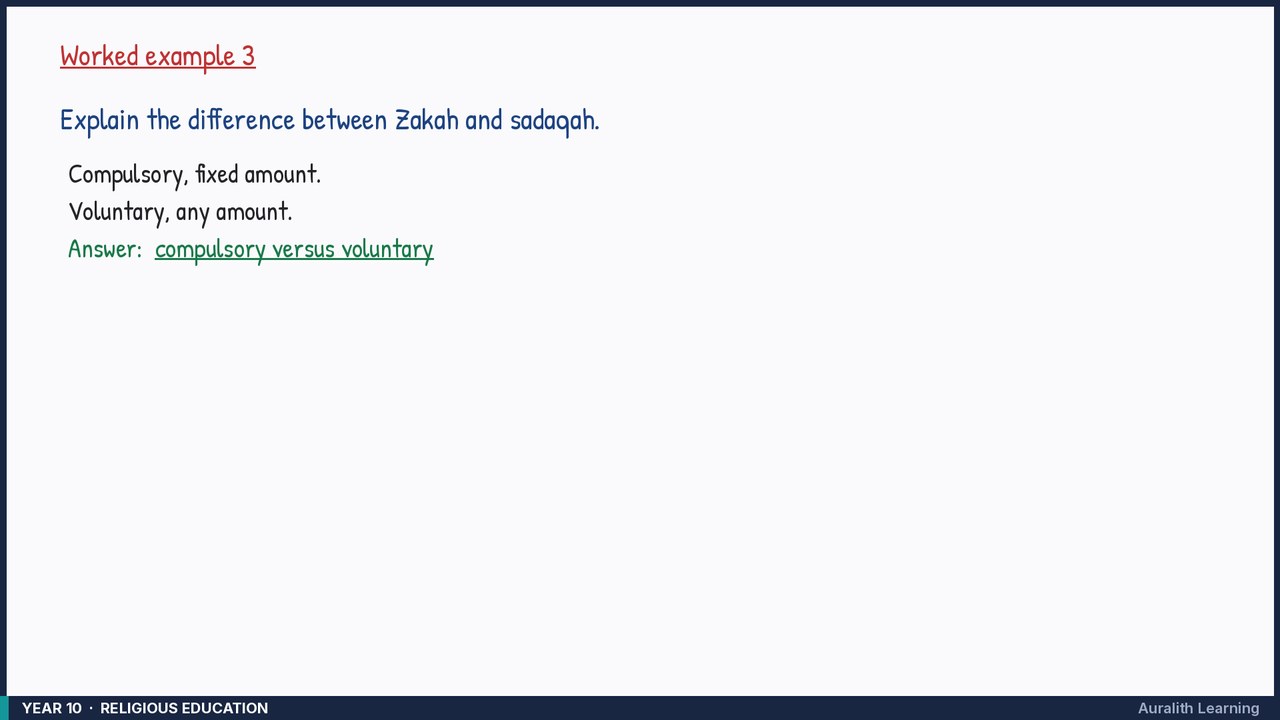
Explain the difference between Zakah and sadaqah.
- Step 1: Compulsory, fixed amount.
- Step 2: Voluntary, any amount.
Answer: compulsory versus voluntary