Year 10 (ages 14–15, Grade 9 in the US) · Religious education · GCSE Religious Studies · Lesson 17
Muslim beliefs: the nature of Allah
Muslim beliefs about the nature of Allah: Tawhid and the sin of shirk, Surah 112, and qualities including immanence, transcendence, omnipotence, beneficence, mercy, fairness and justice, with the 99 names of Allah.
Exam boards: this lesson matches the AQA and Pearson Edexcel GCSE religious education courses. Check which course your school follows.
8-minute video lesson
Teaching, worked examples and 20 practice questions solved step by step.
Watch free for a monthWhat your child will learn
- Explain Tawhid and shirk
- Describe Allah's qualities
- Explain immanence and transcendence
- Explain how these beliefs affect Muslims
The method
- Tawhid: Allah is one; shirk (associating partners with Allah) is the greatest sin.
- Surah 112 (al-Ikhlas) summarises Tawhid.
- Qualities: omnipotent, beneficent, merciful, fair, just.
- Immanent (close) and transcendent (beyond the universe).
Key words: Tawhid, shirk, immanence, transcendence, beneficence.
Worked examples
Worked examples from the lesson, with every step.
Question 1
Explain the meaning of Tawhid.
- Step 1: The oneness of Allah.
- Step 2: No partners, children or equals.
Answer: Allah is one and unique
Question 2
What is shirk and why is it so serious?
- Step 1: Associating partners with Allah.
- Step 2: It breaks Tawhid — the core belief.
Answer: associating partners with Allah — it denies Tawhid
Question 3
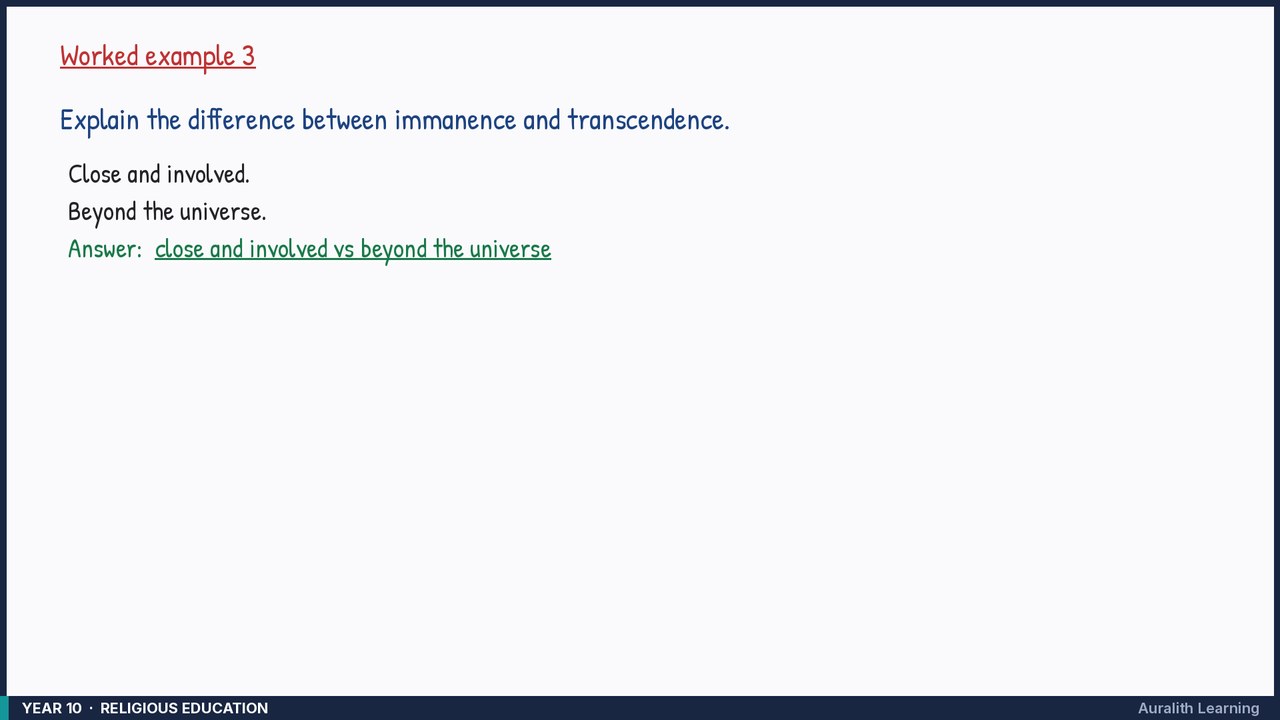
Explain the difference between immanence and transcendence.
- Step 1: Close and involved.
- Step 2: Beyond the universe.
Answer: close and involved vs beyond the universe