Year 10 (ages 14–15, Grade 9 in the US) · Religious education · GCSE Religious Studies · Lesson 4
Christian beliefs: the last days of Jesus' life
The events of Jesus' final days — the Last Supper, betrayal and arrest, trial, crucifixion, resurrection and ascension — as described in the Gospels, and why each is significant for Christians.
Exam boards: this lesson matches the AQA and Pearson Edexcel GCSE religious education courses. Check which course your school follows.
8-minute video lesson
Teaching, worked examples and 20 practice questions solved step by step.
Watch free for a monthWhat your child will learn
- Describe the events of Holy Week
- Explain the significance of the Last Supper
- Explain the significance of the crucifixion and resurrection
- Explain the significance of the ascension
The method
- Order: Last Supper → arrest → trial → crucifixion → burial → resurrection → ascension.
- For each: what happened, and its significance.
- Use Gospel references (e.g. Luke 22–24).
- Link to Christian practice: Eucharist, Easter.
Key words: Last Supper, crucifixion, resurrection, ascension, Holy Week.
Worked examples
Worked examples from the lesson, with every step.
Question 1
Describe what happened at the Last Supper.
- Step 1: Passover meal with the disciples.
- Step 2: Bread as his body; wine as his blood.
Answer: Jesus shared bread and wine, asking to be remembered
Question 2
Explain the significance of the Last Supper for Christians today.
- Step 1: Basis of the Eucharist.
- Step 2: Christians remember Jesus' sacrifice.
Answer: it is remembered in the Eucharist
Question 3
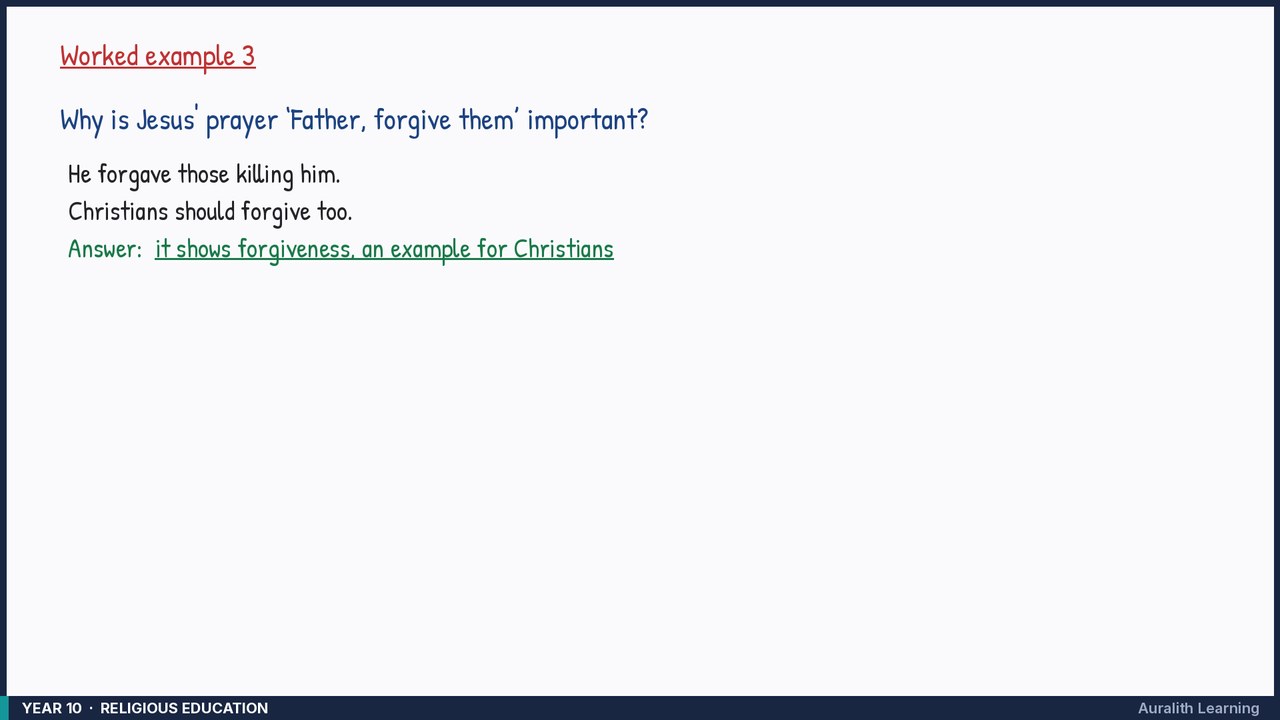
Why is Jesus' prayer ‘Father, forgive them’ important?
- Step 1: He forgave those killing him.
- Step 2: Christians should forgive too.
Answer: it shows forgiveness, an example for Christians