Year 10 (ages 14–15, Grade 9 in the US) · Religious education · GCSE Religious Studies · Lesson 8
Christian responses to evil and suffering
How Christians respond to the problem of evil: free will, suffering as a test or a way to grow (soul-making), the story of Job, Jesus' own suffering, and practical responses such as prayer and charity — with strengths and weaknesses of each.
Exam boards: this lesson matches the AQA and Pearson Edexcel GCSE religious education courses. Check which course your school follows.
8-minute video lesson
Teaching, worked examples and 20 practice questions solved step by step.
Watch free for a monthWhat your child will learn
- Explain the free will response
- Explain the soul-making response
- Use the example of Job
- Describe practical Christian responses
The method
- Free will: God gave humans freedom; moral evil comes from its misuse.
- Soul-making: suffering helps people grow in character.
- Job: faithful despite suffering; God's ways are beyond human understanding.
- Practical: prayer, charity, helping those who suffer.
Key words: free will, soul-making, Job, prayer, charity.
Worked examples
Worked examples from the lesson, with every step.
Question 1
Explain the free will response to evil.
- Step 1: God gave free will so love is genuine.
- Step 2: People misuse it, causing moral evil.
Answer: moral evil results from human misuse of free will
Question 2
Give one strength and one weakness of the free will response.
- Step 1: Explains moral evil; respects human choice.
- Step 2: Doesn't explain natural evil.
Answer: explains moral evil, but not natural evil
Question 3
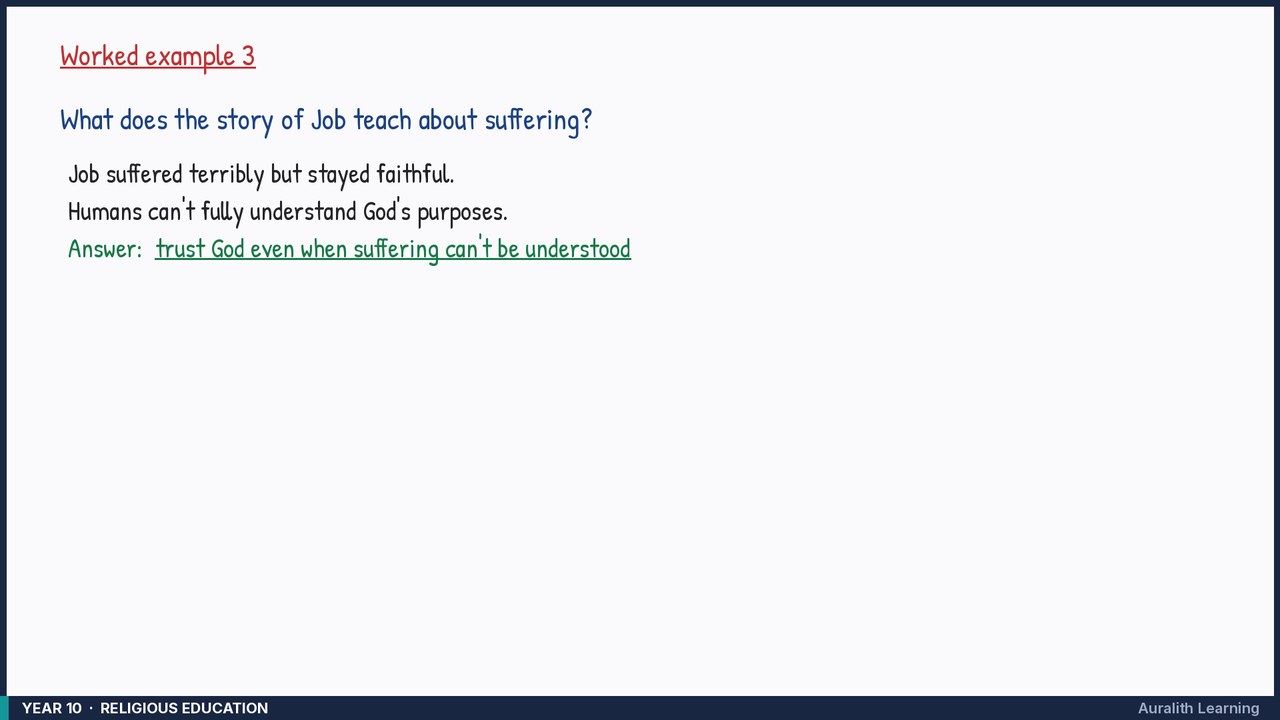
What does the story of Job teach about suffering?
- Step 1: Job suffered terribly but stayed faithful.
- Step 2: Humans can't fully understand God's purposes.
Answer: trust God even when suffering can't be understood