Year 10 (ages 14–15, Grade 9 in the US) · Religious education · GCSE Religious Studies · Lesson 30
Muslim practices: Id-ul-Fitr, Id-ul-Adha and Ashura
Three key Muslim festivals and commemorations: Id-ul-Fitr at the end of Ramadan, Id-ul-Adha remembering Ibrahim's obedience, and Ashura, with how Sunni and Shi'a Muslims mark it differently, and why these occasions matter.
Exam boards: this lesson matches the AQA and Pearson Edexcel GCSE religious education courses. Check which course your school follows.
8-minute video lesson
Teaching, worked examples and 20 practice questions solved step by step.
Watch free for a monthWhat your child will learn
- Describe how Id-ul-Fitr is celebrated
- Explain the origins and practices of Id-ul-Adha
- Explain how Sunni and Shi'a Muslims mark Ashura
- Explain the importance of festivals
The method
- Id-ul-Fitr: end of Ramadan; prayers, Zakat al-Fitr, gifts, family meals.
- Id-ul-Adha: remembers Ibrahim's willingness to sacrifice his son; animal sacrifice; meat shared.
- Ashura (10 Muharram): Shi'a mourn Husayn at Karbala; many Sunni fast.
- Festivals build unity, gratitude and remembrance.
Key words: Id-ul-Fitr, Id-ul-Adha, Ashura, Karbala, sacrifice.
Worked examples
Worked examples from the lesson, with every step.
Question 1
Describe two ways Muslims celebrate Id-ul-Fitr.
- Step 1: Special prayers at the mosque.
- Step 2: Gifts and family meals.
Answer: mosque prayers; gifts and meals
Question 2
Explain why Zakat al-Fitr is given.
- Step 1: Before Id prayers.
- Step 2: So the poor can celebrate too.
Answer: so everyone can share in the festival
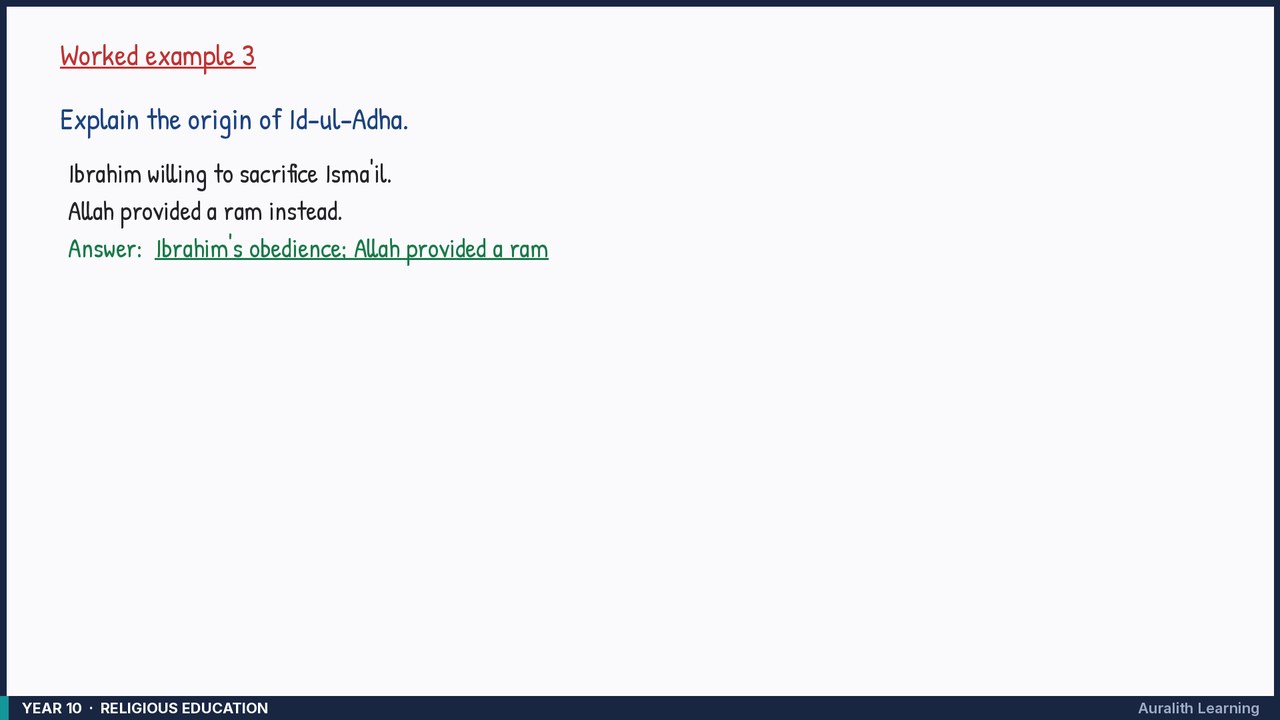
Question 3
Explain the origin of Id-ul-Adha.
- Step 1: Ibrahim willing to sacrifice Isma'il.
- Step 2: Allah provided a ram instead.
Answer: Ibrahim's obedience; Allah provided a ram