Year 10 (ages 14–15, Grade 9 in the US) · Computing · GCSE theory · Lesson 14
Threats to computer systems
The main threats to networks and computer systems: malware, social engineering (including phishing), brute-force attacks, denial-of-service attacks, data interception and SQL injection, explained at the level needed to recognise and defend against them.
Exam boards: this lesson matches the AQA and Pearson Edexcel GCSE computing courses. Check which course your school follows.
8-minute video lesson
Teaching, worked examples and 20 practice questions solved step by step.
Watch free for a monthWhat your child will learn
- Describe types of malware
- Explain social engineering and phishing
- Describe brute-force and denial-of-service attacks
- Explain data interception and SQL injection
The method
- Name the threat.
- Describe how it works (in outline).
- State its effect on the victim.
- Link to a prevention method (next lesson).
Key words: malware, phishing, social engineering, brute-force attack, denial of service.
Worked examples
Worked examples from the lesson, with every step.
Question 1
What is the difference between a virus and a worm?
- Step 1: Needs a host file to be run or shared.
- Step 2: Spreads by itself across networks.
Answer: worms self-spread; viruses need a host file
Question 2
Spot the phishing signs: ‘Dear customer, your account is locked. Click here within 1 hour.’
- Step 1: No name used.
- Step 2: Urgent deadline and a link.
Answer: generic greeting, urgency, suspicious link
Question 3
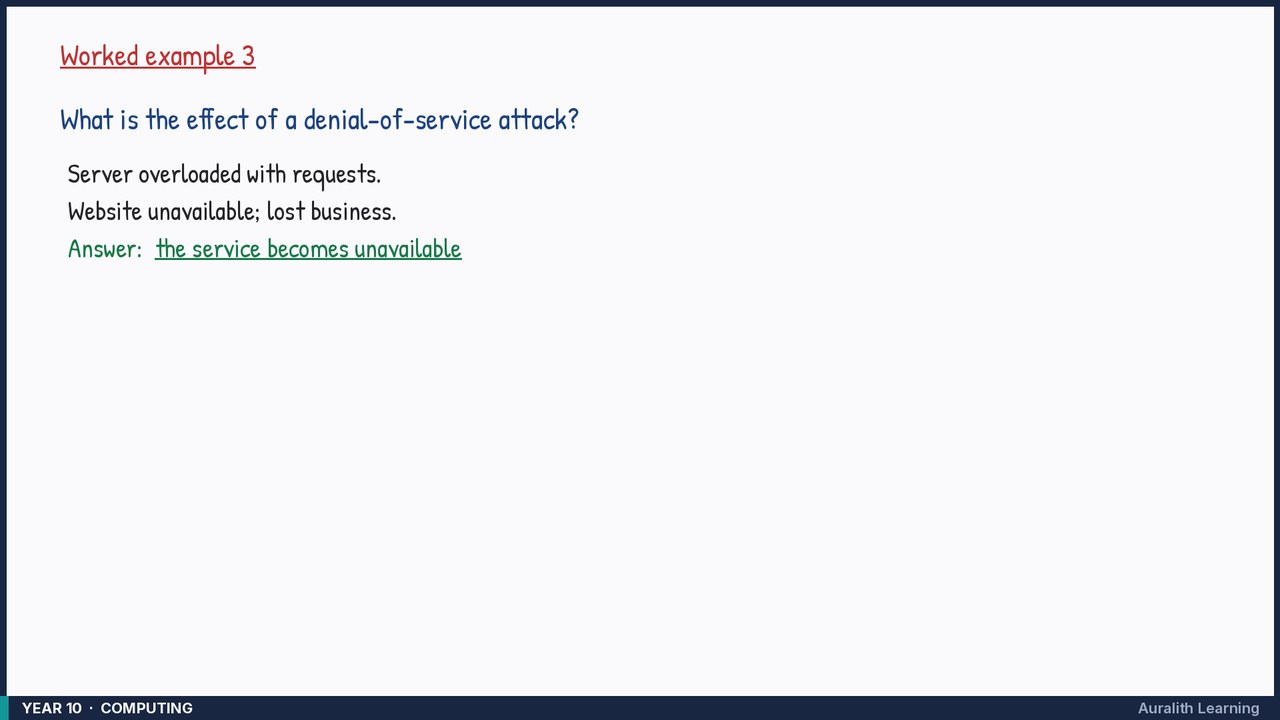
What is the effect of a denial-of-service attack?
- Step 1: Server overloaded with requests.
- Step 2: Website unavailable; lost business.
Answer: the service becomes unavailable