Year 10 (ages 14–15, Grade 9 in the US) · Computing · GCSE theory · Lesson 19
Ethical, cultural and environmental impacts
The wider impacts of digital technology: privacy and surveillance, the digital divide, effects on jobs and wellbeing, and environmental issues including energy use and e-waste, with balanced arguments.
Exam boards: this lesson matches the AQA and Pearson Edexcel GCSE computing courses. Check which course your school follows.
8-minute video lesson
Teaching, worked examples and 20 practice questions solved step by step.
Watch free for a monthWhat your child will learn
- Explain ethical issues such as privacy
- Explain the digital divide
- Describe environmental impacts
- Present balanced arguments
The method
- Identify stakeholders affected.
- Give positive and negative impacts.
- Use specific examples.
- Reach a balanced judgement.
Key words: privacy, digital divide, e-waste, surveillance, stakeholder.
Worked examples
Worked examples from the lesson, with every step.
Question 1
What is the digital divide?
- Step 1: Gap between those with and without access to technology.
- Step 2: Cost, location, age, skills.
Answer: unequal access to digital technology
Question 2
Give one positive and one negative of CCTV in town centres.
- Step 1: Helps prevent and solve crime.
- Step 2: Reduces privacy; people feel watched.
Answer: safety versus privacy
Question 3
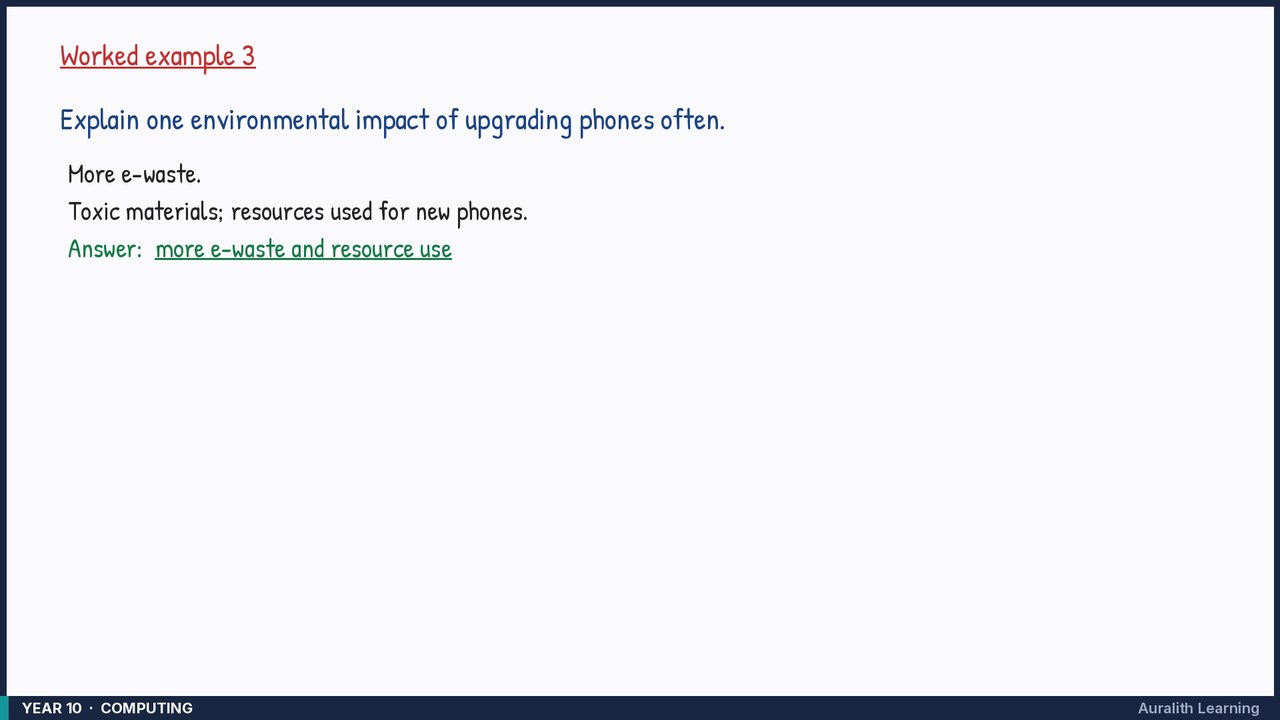
Explain one environmental impact of upgrading phones often.
- Step 1: More e-waste.
- Step 2: Toxic materials; resources used for new phones.
Answer: more e-waste and resource use