Year 10 (ages 14–15, Grade 9 in the US) · History · GCSE thematic study and historic environment · Lesson 9
The Western Front: trenches, illness and injuries
The British sector of the Western Front 1914–18: the trench system, key battles and locations, the conditions that caused illness such as trench foot, trench fever and shell shock, and the wounds caused by new weapons.
Exam boards: this lesson matches the Pearson Edexcel GCSE history courses. Check which course your school follows.
8-minute video lesson
Teaching, worked examples and 20 practice questions solved step by step.
Watch free for a monthWhat your child will learn
- Describe the trench system
- Identify key battles and locations
- Explain illnesses caused by trench conditions
- Describe wounds caused by new weapons
The method
- Link each illness to a trench condition.
- Link each wound to a weapon.
- Use specific places: Ypres, the Somme, Arras, Cambrai.
- Use dates to anchor examples.
Key words: trench foot, trench fever, shell shock, shrapnel, gas.
Worked examples
Worked examples from the lesson, with every step.
Question 1
Describe one feature of trench foot. (2 marks)
- Step 1: Caused by cold, wet conditions.
- Step 2: Feet swelled; could lead to gangrene.
Answer: cold, wet feet swelled and could develop gangrene
Question 2
What caused trench fever?
- Step 1: Lice in clothing.
- Step 2: Flu-like symptoms.
Answer: lice
Question 3
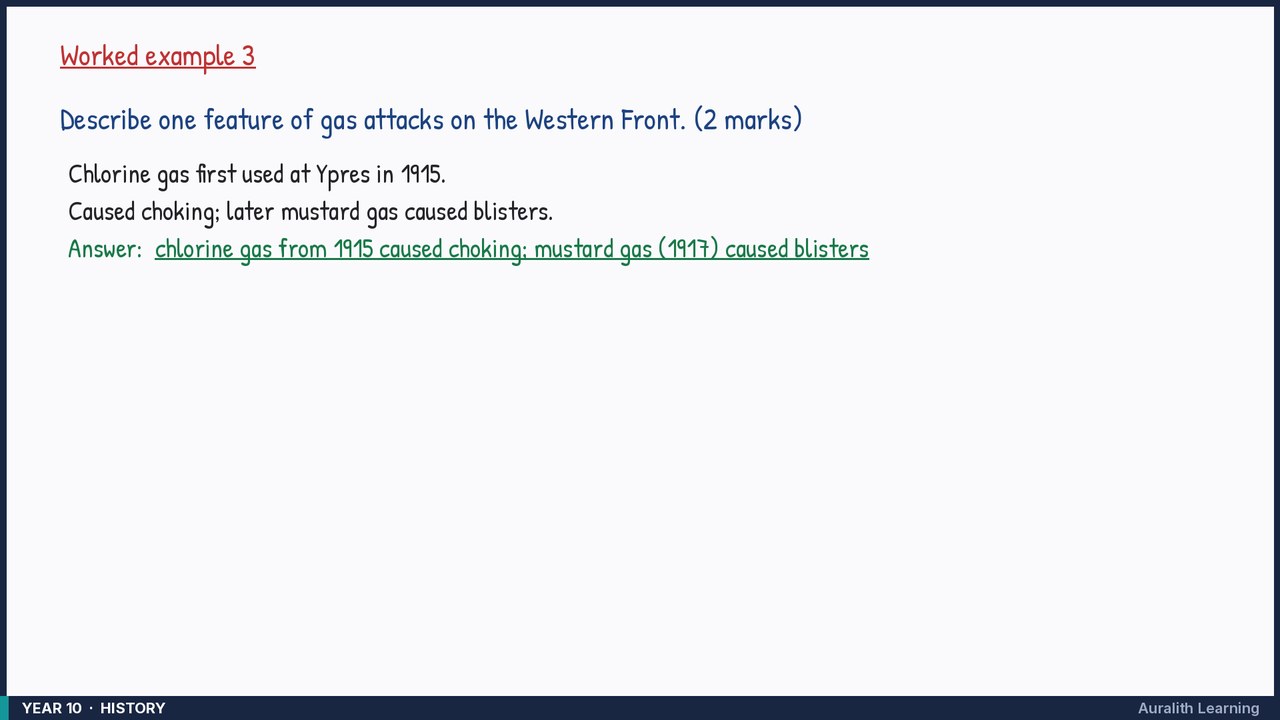
Describe one feature of gas attacks on the Western Front. (2 marks)
- Step 1: Chlorine gas first used at Ypres in 1915.
- Step 2: Caused choking; later mustard gas caused blisters.
Answer: chlorine gas from 1915 caused choking; mustard gas (1917) caused blisters