Year 10 (ages 14–15, Grade 9 in the US) · History · GCSE thematic study and historic environment · Lesson 2
Medieval treatment, care and the Black Death
How medieval people treated and prevented illness, who provided care, the role of Church-run hospitals, and how people explained and responded to the Black Death of 1348.
Exam boards: this lesson matches the AQA and Pearson Edexcel GCSE history courses. Check which course your school follows.
8-minute video lesson
Teaching, worked examples and 20 practice questions solved step by step.
Watch free for a monthWhat your child will learn
- Describe medieval treatments
- Identify who provided care
- Describe medieval hospitals
- Explain responses to the Black Death
The method
- Link each treatment to the idea behind it.
- Physicians diagnosed; apothecaries mixed remedies; barber-surgeons operated.
- Hospitals cared rather than cured.
- Black Death: explanations matched beliefs; responses matched explanations.
Key words: physician, apothecary, barber-surgeon, hospital, Black Death.
Worked examples
Worked examples from the lesson, with every step.
Question 1
Why did medieval people go on pilgrimage when ill?
- Step 1: God or the saints could heal.
- Step 2: Visiting holy shrines.
Answer: they believed God would cure them
Question 2
Describe one feature of medieval hospitals. (2 marks)
- Step 1: Run by the Church.
- Step 2: Focused on care, rest and prayer.
Answer: Church-run, offering care and prayer rather than cure
Question 3
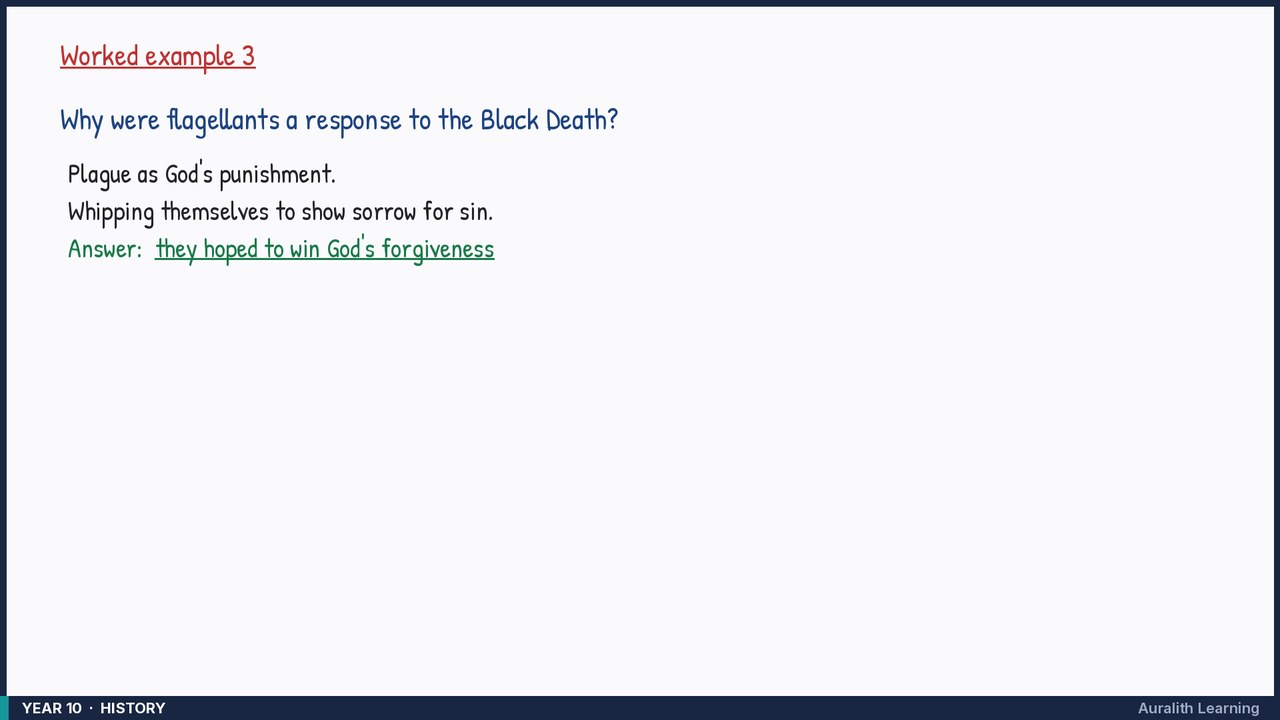
Why were flagellants a response to the Black Death?
- Step 1: Plague as God's punishment.
- Step 2: Whipping themselves to show sorrow for sin.
Answer: they hoped to win God's forgiveness