Year 10 (ages 14–15, Grade 9 in the US) · History · GCSE thematic study and historic environment · Lesson 7
Modern medicine: causes, diagnosis and the NHS, c1900–present
How understanding of disease improved with genetics and lifestyle research, how new technology changed diagnosis, and how the NHS (1948) and government action transformed care and prevention.
Exam boards: this lesson matches the AQA and Pearson Edexcel GCSE history courses. Check which course your school follows.
9-minute video lesson
Teaching, worked examples and 20 practice questions solved step by step.
Watch free for a monthWhat your child will learn
- Explain how genetics changed understanding
- Explain the link between lifestyle and disease
- Describe new diagnostic technology
- Explain the impact of the NHS and government campaigns
The method
- Causes: germs, genes and lifestyle.
- Diagnosis: blood tests, scans, monitors.
- Care: NHS from 1948, free at the point of use.
- Prevention: vaccination campaigns, laws, public information.
Key words: genetics, lifestyle, diagnosis, NHS, prevention.
Worked examples
Worked examples from the lesson, with every step.
Question 1
Describe one feature of the NHS when it was set up. (2 marks)
- Step 1: Free at the point of use.
- Step 2: Paid for by taxes; launched 1948.
Answer: free at the point of use, funded by taxes, from 1948
Question 2
How did the discovery of DNA's structure change medicine?
- Step 1: Revealed that some diseases are genetic.
- Step 2: Led to genetic testing and research into treatments.
Answer: it helped identify genetic causes of disease
Question 3
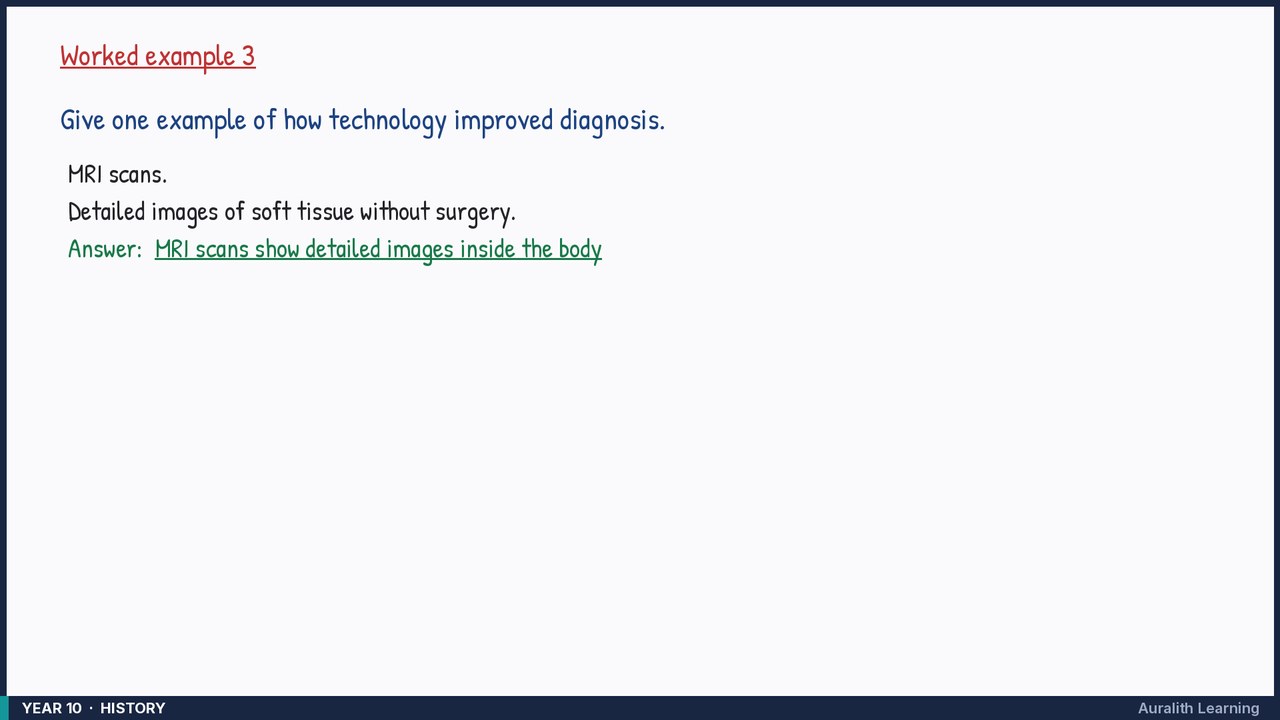
Give one example of how technology improved diagnosis.
- Step 1: MRI scans.
- Step 2: Detailed images of soft tissue without surgery.
Answer: MRI scans show detailed images inside the body