Year 11 (ages 15–16, Grade 10 in the US) · History · GCSE modern depth study · Lesson 1
The Weimar Republic: origins, constitution and the Treaty of Versailles
How Germany became a republic at the end of the First World War, the strengths and weaknesses of the Weimar Constitution, and the terms of the Treaty of Versailles and why Germans resented them.
Exam boards: this lesson matches the AQA and Pearson Edexcel GCSE history courses. Check which course your school follows.
9-minute video lesson
Teaching, worked examples and 20 practice questions solved step by step.
Watch free for a monthWhat your child will learn
- Explain how the Weimar Republic began
- Evaluate the Weimar Constitution
- Describe the terms of the Treaty of Versailles
- Explain why the treaty was resented
The method
- November 1918: Kaiser Wilhelm II abdicated; armistice signed.
- 1919: the Weimar Constitution created a democracy.
- Weaknesses: proportional representation, Article 48.
- Versailles: war guilt, reparations, military limits, lost land.
Key words: republic, constitution, proportional representation, Article 48, reparations.
Worked examples
Worked examples from the lesson, with every step.
Question 1
Why did the new government meet in Weimar?
- Step 1: Berlin was unsafe because of unrest.
- Step 2: Weimar was quieter.
Answer: Berlin was too dangerous
Question 2
Explain one weakness of proportional representation.
- Step 1: Many small parties won seats.
- Step 2: Coalition governments were weak and often collapsed.
Answer: it led to unstable coalitions
Question 3
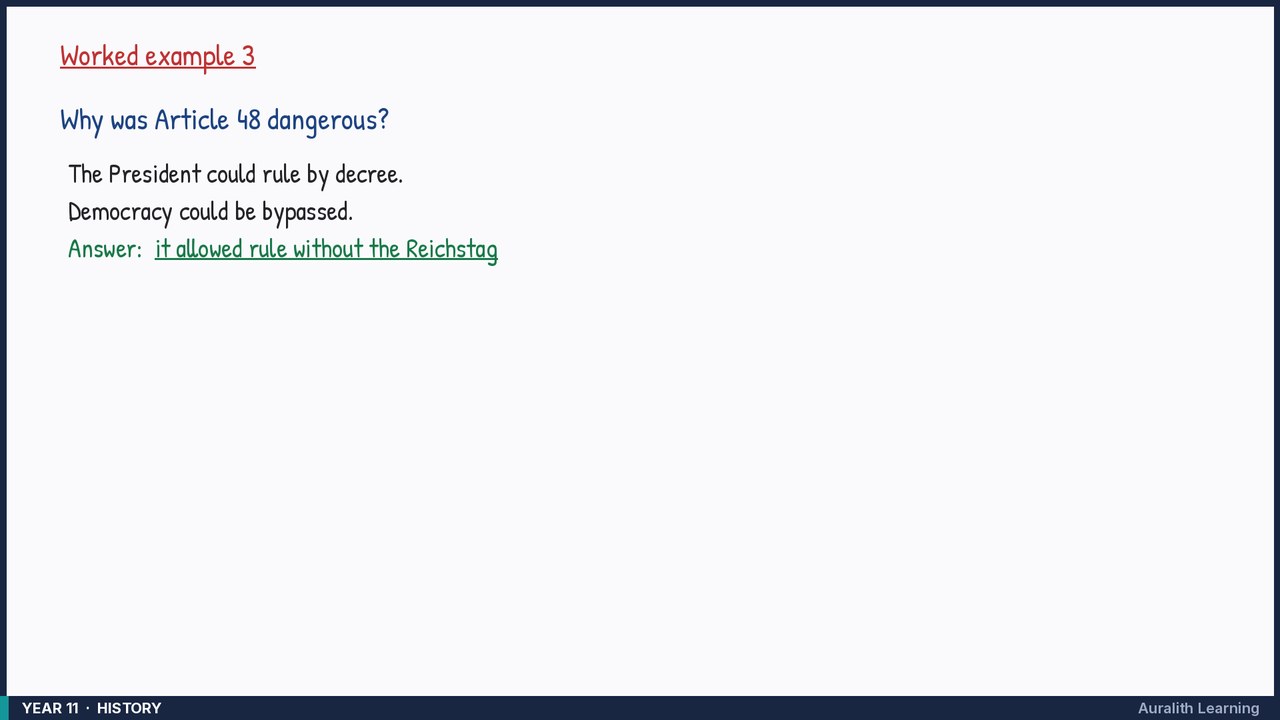
Why was Article 48 dangerous?
- Step 1: The President could rule by decree.
- Step 2: Democracy could be bypassed.
Answer: it allowed rule without the Reichstag