Year 11 (ages 15–16, Grade 10 in the US) · History · GCSE modern depth study · Lesson 8
Nazi racial policy and persecution
Nazi racial beliefs and how they led to the persecution of Jewish people and other groups in Germany between 1933 and 1939: the boycott of Jewish businesses, the Nuremberg Laws, Kristallnacht, and the treatment of Roma, Sinti, disabled people and others.
Exam boards: this lesson matches the AQA and Pearson Edexcel GCSE history courses. Check which course your school follows.
9-minute video lesson
Teaching, worked examples and 20 practice questions solved step by step.
Watch free for a monthWhat your child will learn
- Explain Nazi racial beliefs
- Describe the stages of persecution of Jewish people, 1933–1939
- Describe the persecution of other groups
- Explain why persecution increased
The method
- Nazi ideology ranked people by ‘race’ — a false and harmful belief.
- 1933: boycott of Jewish shops; Jewish people removed from many jobs.
- 1935: Nuremberg Laws removed citizenship and banned marriages.
- 1938: Kristallnacht — violent attacks across Germany.
Key words: persecution, Nuremberg Laws, Kristallnacht, antisemitism, minority.
Worked examples
Worked examples from the lesson, with every step.
Question 1
What is antisemitism?
- Step 1: Hatred of, or prejudice against, Jewish people.
Answer: prejudice against Jewish people
Question 2
What happened in April 1933?
- Step 1: A boycott of Jewish shops and businesses.
- Step 2: To damage Jewish livelihoods.
Answer: a boycott of Jewish businesses
Question 3
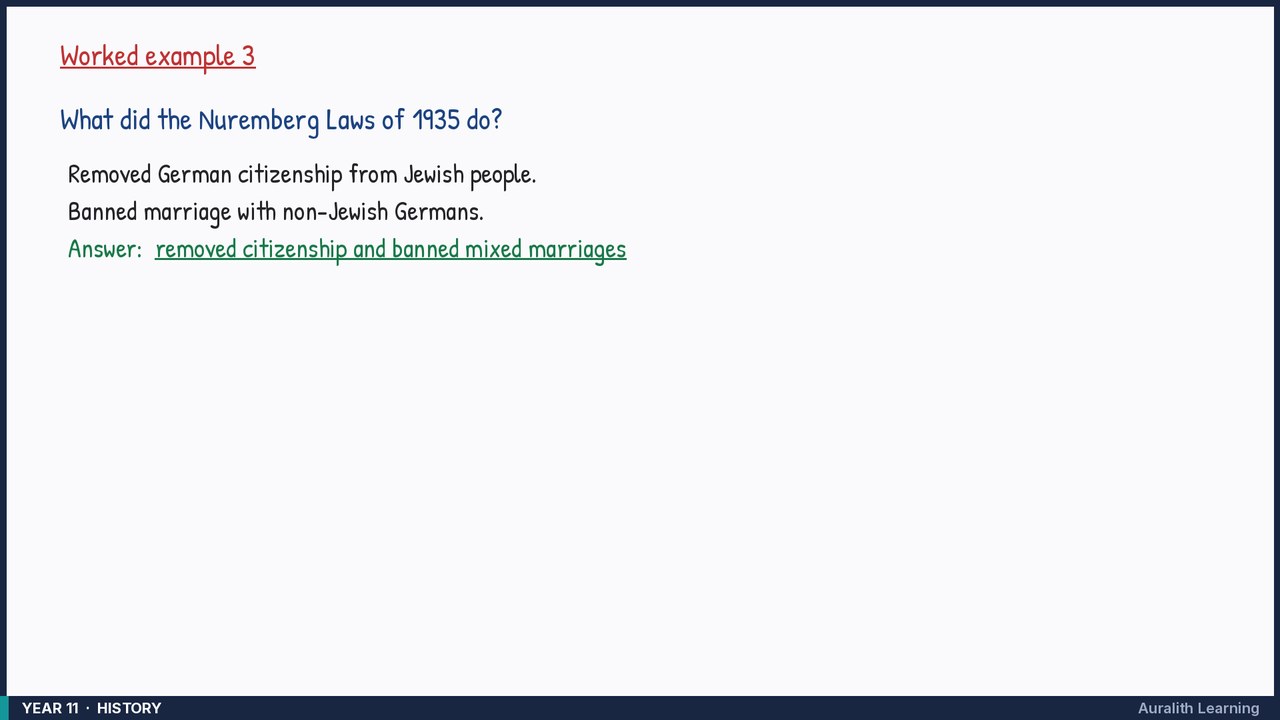
What did the Nuremberg Laws of 1935 do?
- Step 1: Removed German citizenship from Jewish people.
- Step 2: Banned marriage with non-Jewish Germans.
Answer: removed citizenship and banned mixed marriages