Year 11 (ages 15–16, Grade 10 in the US) · History · GCSE modern depth study · Lesson 4
Hitler's rise to power, 1929–1933
How the Nazi Party grew from a small group into the largest party in the Reichstag: the impact of the Depression, Nazi propaganda and the SA, election results, and the political deals that made Hitler Chancellor in January 1933.
Exam boards: this lesson matches the AQA and Pearson Edexcel GCSE history courses. Check which course your school follows.
8-minute video lesson
Teaching, worked examples and 20 practice questions solved step by step.
Watch free for a monthWhat your child will learn
- Explain the impact of the Depression
- Explain why Nazi support grew
- Describe Nazi election results
- Explain how Hitler became Chancellor
The method
- 1929 Wall Street Crash: US loans recalled; unemployment soared.
- Nazis promised jobs, strong leadership and to overturn Versailles.
- July 1932: Nazis became the largest party (230 seats).
- January 1933: Hindenburg appointed Hitler Chancellor after political deals.
Key words: Depression, propaganda, SA, Chancellor, Hindenburg.
Worked examples
Worked examples from the lesson, with every step.
Question 1
How did the Wall Street Crash affect Germany?
- Step 1: US loans were recalled.
- Step 2: Businesses failed and unemployment soared.
Answer: loans recalled, mass unemployment
Question 2
Give two reasons why Nazi support grew.
- Step 1: Unemployed people wanted jobs.
- Step 2: Goebbels' propaganda spread the message.
Answer: the Depression and propaganda
Question 3
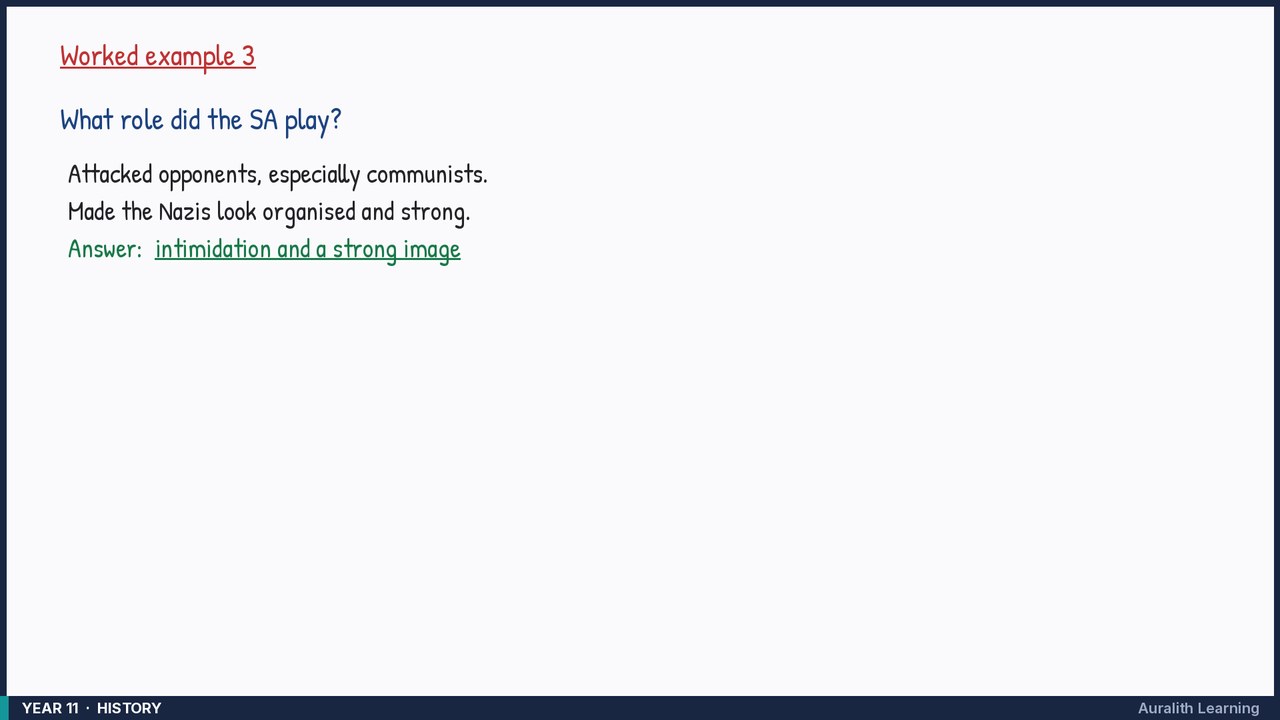
What role did the SA play?
- Step 1: Attacked opponents, especially communists.
- Step 2: Made the Nazis look organised and strong.
Answer: intimidation and a strong image