Year 11 (ages 15–16, Grade 10 in the US) · History · GCSE modern depth study · Lesson 7
Life in Nazi Germany: women, young people and work
How Nazi policies affected daily life: the role expected of women, the Hitler Youth and changes to education, how unemployment was reduced, and the German Labour Front's schemes for workers.
Exam boards: this lesson matches the AQA and Pearson Edexcel GCSE history courses. Check which course your school follows.
8-minute video lesson
Teaching, worked examples and 20 practice questions solved step by step.
Watch free for a monthWhat your child will learn
- Describe Nazi policies towards women
- Explain how the Nazis controlled young people
- Explain how unemployment was reduced
- Evaluate how far workers benefited
The method
- Women: encouraged to focus on family and home; marriage loans.
- Youth: Hitler Youth, League of German Maidens; Nazi education.
- Jobs: public works, rearmament, National Labour Service.
- Workers: Strength Through Joy, but fewer rights.
Key words: Hitler Youth, League of German Maidens, Labour Front, Strength Through Joy, invisible unemployment.
Worked examples
Worked examples from the lesson, with every step.
Question 1
What did the Law for the Encouragement of Marriage do?
- Step 1: Gave loans to married couples.
- Step 2: Part of the loan was cancelled for each child.
Answer: loans to encourage marriage and children
Question 2
How did the Hitler Youth prepare boys for the future?
- Step 1: Sport, camping, military drills.
- Step 2: To create loyal, fit future soldiers.
Answer: through fitness and military-style training
Question 3
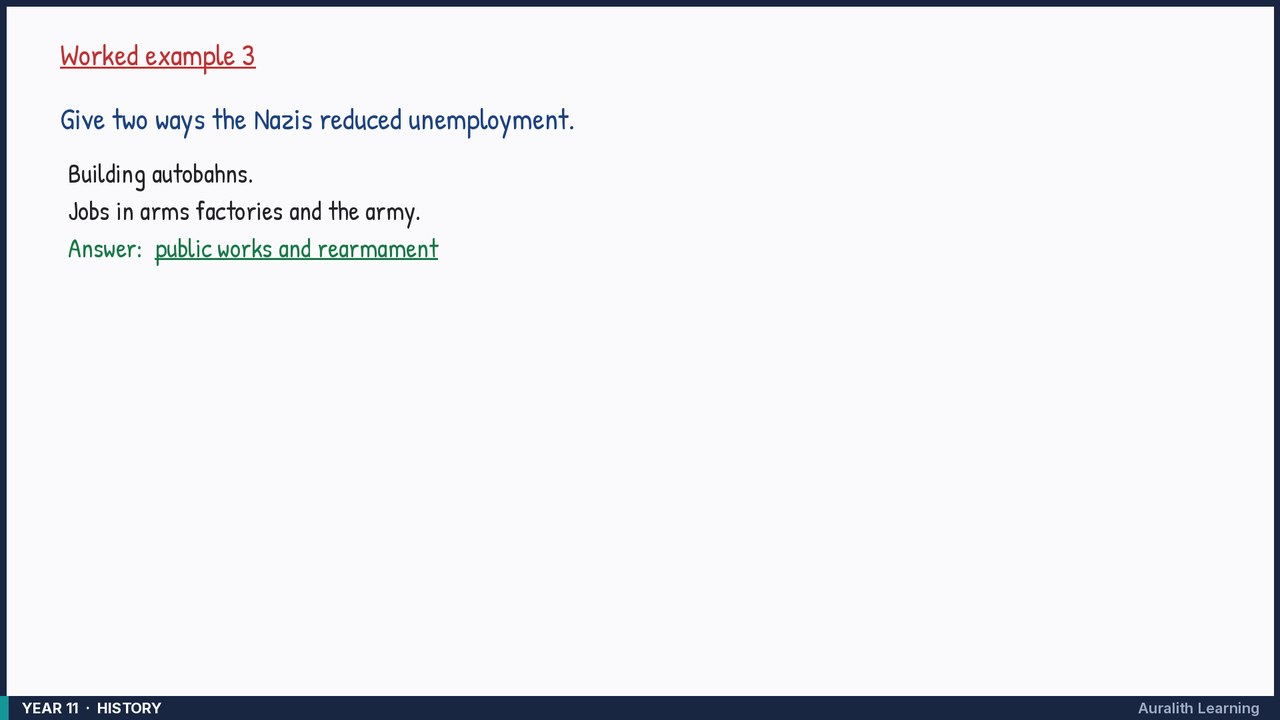
Give two ways the Nazis reduced unemployment.
- Step 1: Building autobahns.
- Step 2: Jobs in arms factories and the army.
Answer: public works and rearmament