Year 10 (ages 14–15, Grade 9 in the US) · Computing · GCSE programming · Lesson 7
Lists (arrays)
Storing many values in one variable using Python lists: creating lists, indexing, changing items, append and remove, len(), looping through a list, and finding totals, maximums and averages.
Exam boards: this lesson matches the AQA and Pearson Edexcel GCSE computing courses. Check which course your school follows.
8-minute video lesson
Teaching, worked examples and 20 practice questions solved step by step.
Watch free for a monthWhat your child will learn
- Create and index a list
- Add, change and remove items
- Loop through a list
- Calculate total, maximum and average
The method
- A list stores many values: scores = [5, 8, 2].
- Indexes start at 0: scores[0] is 5.
- append() adds to the end; remove() deletes a value.
- Loop with for item in list, or for i in range(len(list)).
Key words: list, array, element, index, append.
Worked examples
Worked examples from the lesson, with every step.
Question 1
nums = [4, 9, 2, 7]. What is nums[1] + nums[3]?
- Step 1: nums[1] = 9; nums[3] = 7
- Step 2: 9 + 7 = 16
Answer: 16
Question 2
What is in the list after this code? c:pets = ["cat", "dog"] c:pets.append("fish") c:pets[0] = "rabbit"
- Step 1: ["cat", "dog", "fish"]
- Step 2: index 0 → "rabbit"
Answer: ["rabbit", "dog", "fish"]
Question 3
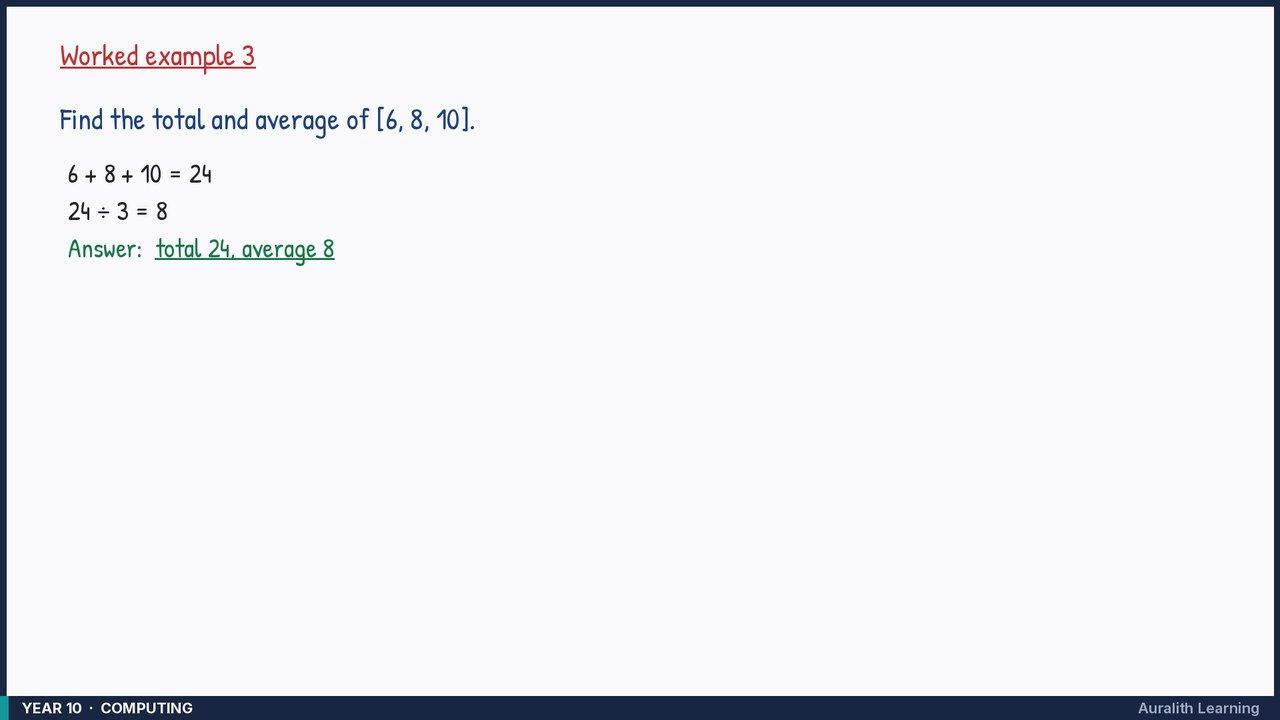
Find the total and average of [6, 8, 10].
- Step 1: 6 + 8 + 10 = 24
- Step 2: 24 ÷ 3 = 8
Answer: total 24, average 8