Year 11 (ages 15–16, Grade 10 in the US) · History · GCSE British depth study · Lesson 5
Elizabethan society: education, leisure and poverty
Daily life in Elizabethan England: the structure of society, education, popular pastimes and the theatre, the causes of rising poverty and vagrancy, and how governments responded with the Poor Laws.
Exam boards: this lesson matches the AQA and Pearson Edexcel GCSE history courses. Check which course your school follows.
8-minute video lesson
Teaching, worked examples and 20 practice questions solved step by step.
Watch free for a monthWhat your child will learn
- Describe the structure of Elizabethan society
- Describe education and leisure
- Explain the causes of poverty
- Explain how authorities responded to poverty
The method
- Society: nobility, gentry, yeomen, labourers, the poor.
- Education grew, especially for boys of wealthier families.
- Poverty rose: population growth, rising prices, enclosure.
- Laws: harsh on ‘idle’ vagabonds; relief for the ‘deserving’ poor.
Key words: vagabond, Poor Law, enclosure, inflation, grammar school.
Worked examples
Worked examples from the lesson, with every step.
Question 1
Who were the gentry?
- Step 1: Landowners below the nobility.
- Step 2: Often JPs and MPs.
Answer: wealthy landowners below the nobility
Question 2
Give two causes of rising poverty.
- Step 1: More people, more competition.
- Step 2: Prices rose faster than wages.
Answer: population growth and inflation
Question 3
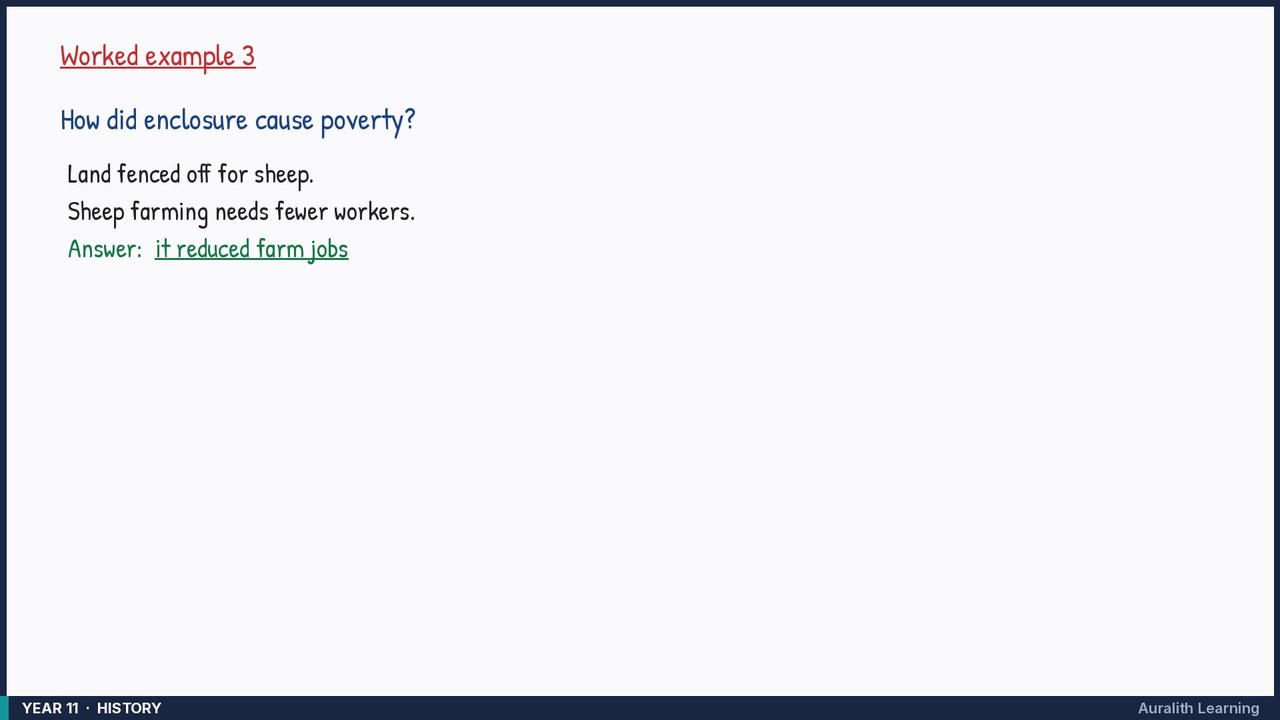
How did enclosure cause poverty?
- Step 1: Land fenced off for sheep.
- Step 2: Sheep farming needs fewer workers.
Answer: it reduced farm jobs