Year 11 (ages 15–16, Grade 10 in the US) · History · Elizabethan England, 1568–1603: further topics · Lesson 2
The difficulties of a female ruler: Parliament, the succession and Essex
Why Elizabeth's gender, her refusal to marry and the unresolved succession caused tension; how she handled Parliament, including disputes over free speech and the monopolies debate of 1601; and why the Earl of Essex rebelled in 1601 and failed.
Exam boards: this lesson matches the AQA GCSE history courses. Check which course your school follows.
9-minute video lesson
Teaching, worked examples and 20 practice questions solved step by step.
Watch free for a monthWhat your child will learn
- Explain why being a female ruler brought difficulties
- Describe Elizabeth's relationship with Parliament
- Explain why the succession was a problem
- Describe the causes, events and results of the Essex Rebellion
The method
- What did people expect of a queen?
- Why did Parliament press her to marry?
- How did she manage Parliament?
- Why did Essex fall from favour?
- Why did his rebellion fail?
Key words: succession, Parliament, free speech, monopoly, rebellion.
Worked examples
Worked examples from the lesson, with every step.
Question 1
Describe two difficulties Elizabeth faced as a female ruler. (4 marks)
- Step 1: Many believed women should not rule.
- Step 2: Pressure to marry and produce an heir.
Answer: beliefs that women should not rule; pressure to marry and provide an heir
Question 2
Why did Elizabeth refuse to marry?
- Step 1: A husband might take power from her.
- Step 2: A foreign husband could drag England into others' wars; an English one could cause jealousy.
Answer: to keep her power and avoid political problems
Question 3
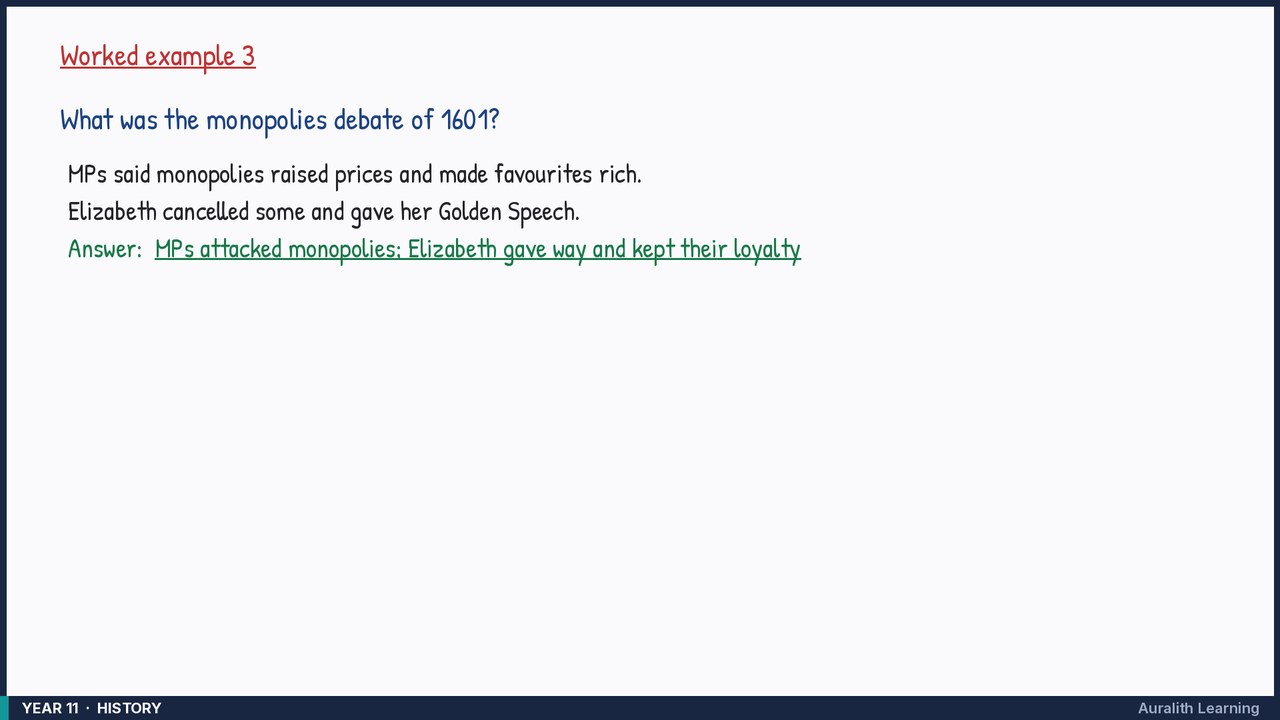
What was the monopolies debate of 1601?
- Step 1: MPs said monopolies raised prices and made favourites rich.
- Step 2: Elizabeth cancelled some and gave her Golden Speech.
Answer: MPs attacked monopolies; Elizabeth gave way and kept their loyalty