Year 11 (ages 15–16, Grade 10 in the US) · Geography · GCSE human geography · Lesson 5
The development gap: causes and strategies
Why some countries are richer than others — physical, economic and historical causes of uneven development — its consequences, and strategies to reduce the development gap, including aid, investment, fair trade, debt relief, tourism, microfinance and intermediate technology.
Exam boards: this lesson matches the AQA GCSE geography courses. Check which course your school follows.
8-minute video lesson
Teaching, worked examples and 20 practice questions solved step by step.
Watch free for a monthWhat your child will learn
- Explain the causes of uneven development
- Describe the consequences of the development gap
- Describe strategies to reduce the gap
- Evaluate the strategies
The method
- Physical causes: climate, hazards, landlocked location, few resources.
- Economic: trade in low-value goods; debt.
- Historical: effects of colonialism.
- Strategies: aid, investment, fair trade, debt relief, tourism, microfinance.
Key words: development gap, aid, fair trade, debt relief, intermediate technology.
Worked examples
Worked examples from the lesson, with every step.
Question 1
Explain how being landlocked can slow development.
- Step 1: No coastline for ports.
- Step 2: Trade is more expensive and slower.
Answer: it makes trade harder and more costly
Question 2
Why does exporting raw materials limit development?
- Step 1: Raw materials earn low, unstable prices.
- Step 2: Manufactured goods add more value.
Answer: raw materials earn less than manufactured goods
Question 3
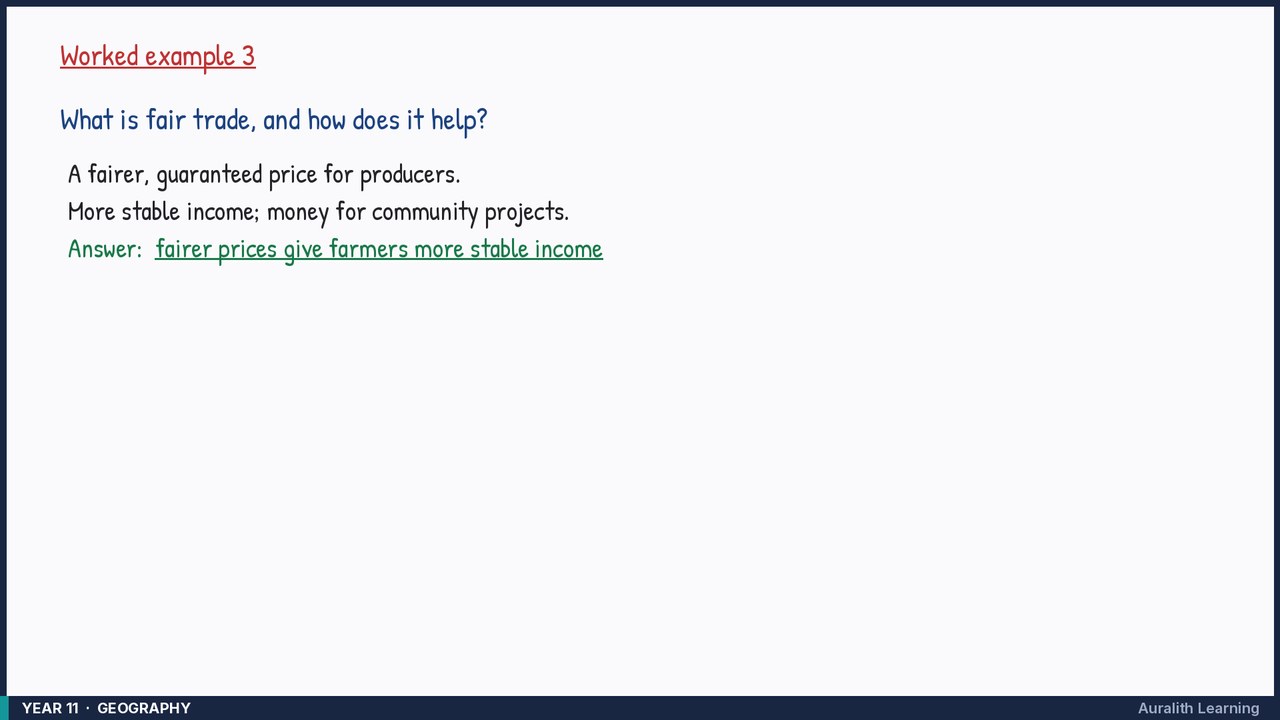
What is fair trade, and how does it help?
- Step 1: A fairer, guaranteed price for producers.
- Step 2: More stable income; money for community projects.
Answer: fairer prices give farmers more stable income