Year 11 (ages 15–16, Grade 10 in the US) · Citizenship · Power, politics and the constitution · Lesson 3
Elections, voting systems and devolution
How UK general elections work, the first-past-the-post system and alternatives, who can vote, devolved government in Scotland, Wales and Northern Ireland, local government, and how citizens can take part in democracy.
Exam boards: this lesson matches the AQA and Pearson Edexcel GCSE citizenship courses. Check which course your school follows.
8-minute video lesson
Teaching, worked examples and 20 practice questions solved step by step.
Watch free for a monthWhat your child will learn
- Explain how UK general elections work
- Compare first past the post with proportional systems
- Describe devolution in the UK
- Explain ways citizens can participate
The method
- UK general elections: first past the post, at least every five years.
- PR systems match seats more closely to votes.
- Devolution: powers passed to Scotland, Wales and Northern Ireland.
- Participation: voting, campaigning, petitions, contacting MPs.
Key words: first past the post, proportional representation, devolution, turnout, participation.
Worked examples
Worked examples from the lesson, with every step.
Question 1
How does first past the post work?
- Step 1: Each area elects one MP.
- Step 2: The candidate with the most votes wins.
Answer: most votes in each constituency wins
Question 2
Give one advantage and one disadvantage of FPTP.
- Step 1: Simple; clear local link.
- Step 2: Seats don't match votes; small parties lose out.
Answer: simple vs not proportional
Question 3
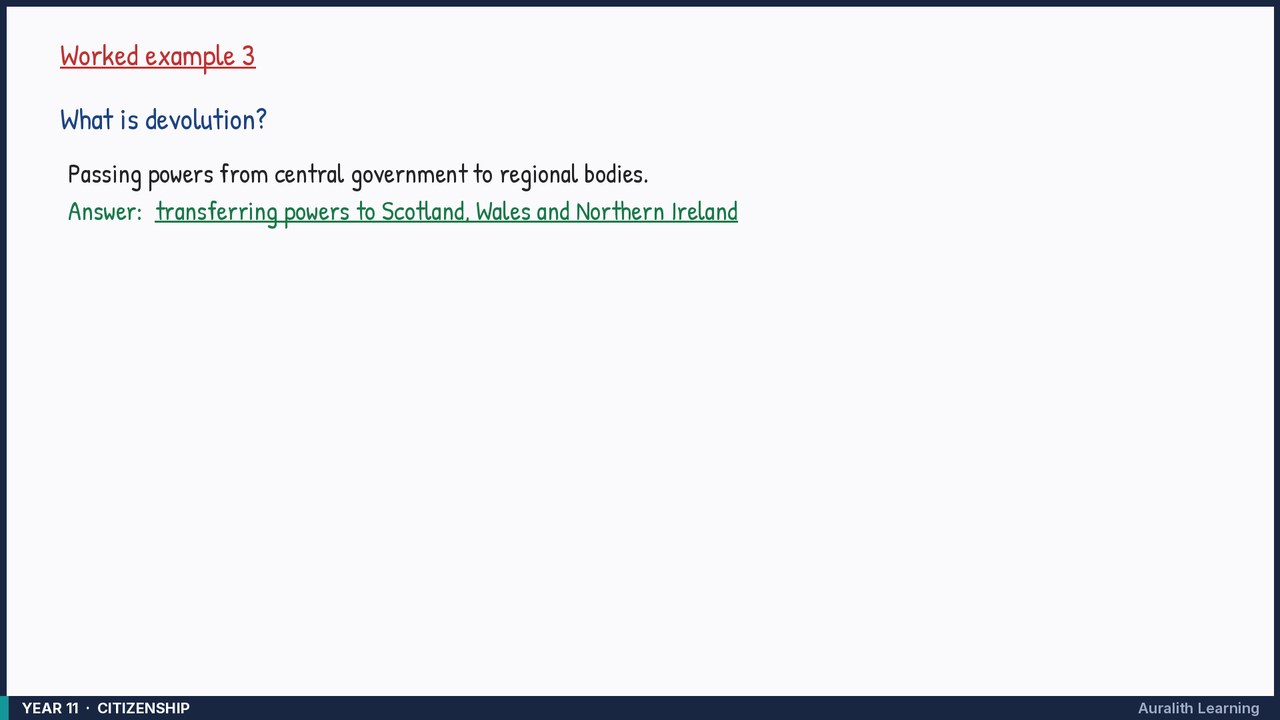
What is devolution?
- Step 1: Passing powers from central government to regional bodies.
Answer: transferring powers to Scotland, Wales and Northern Ireland