Year 10 (ages 14–15, Grade 9 in the US) · Science · Biology: genetics · Lesson 1
Meiosis and sexual reproduction
Sexual and asexual reproduction compared, how meiosis makes four genetically different haploid gametes, and how fertilisation restores the diploid number.
Exam boards: this lesson matches the AQA and Pearson Edexcel GCSE science courses. Check which course your school follows.
8-minute video lesson
Teaching, worked examples and 20 practice questions solved step by step.
Watch free for a monthWhat your child will learn
- Compare sexual and asexual reproduction
- Describe the outcome of meiosis
- Compare mitosis and meiosis
- Explain how fertilisation restores chromosome number
The method
- Asexual: one parent, mitosis, identical offspring.
- Sexual: two parents, gametes, varied offspring.
- Meiosis: two divisions, four different haploid cells.
- Fertilisation: 23 + 23 = 46.
Key words: meiosis, gamete, haploid, fertilisation, variation.
Worked examples
Worked examples from the lesson, with every step.
Question 1
Give one advantage and one disadvantage of asexual reproduction.
- Step 1: Fast; only one parent needed.
- Step 2: No variation; a disease could wipe out all.
Answer: fast, but no variation
Question 2
How many cells does meiosis produce from one cell?
- Step 1: Two divisions.
- Step 2: 1 → 2 → 4
Answer: 4
Question 3
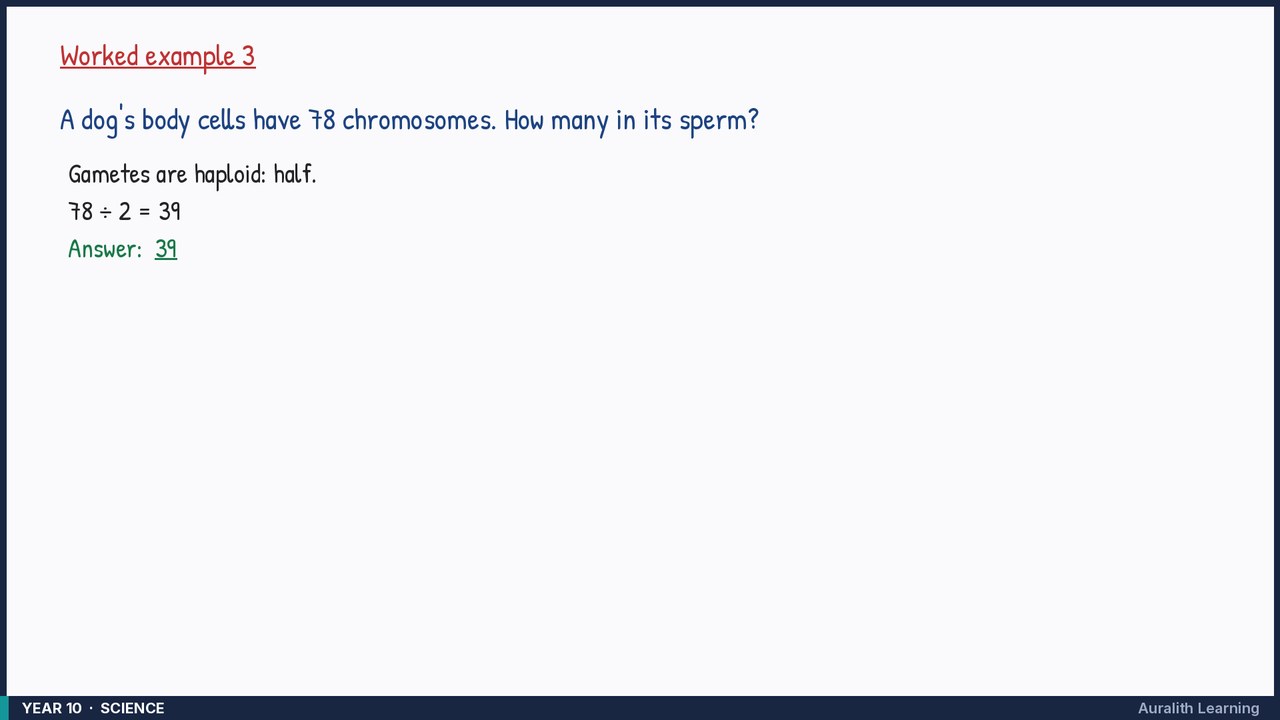
A dog's body cells have 78 chromosomes. How many in its sperm?
- Step 1: Gametes are haploid: half.
- Step 2: 78 ÷ 2 = 39
Answer: 39