Year 10 (ages 14–15, Grade 9 in the US) · Science · Biology: natural selection and genetic modification · Lesson 2
Evidence for human evolution and classification
Fossil evidence for human evolution (Ardi, Lucy and the Leakeys' finds), how stone tools show developing skills and how they are dated, and classifying life using the three-domain system.
Exam boards: this lesson matches the AQA and Pearson Edexcel GCSE science courses. Check which course your school follows.
9-minute video lesson
Teaching, worked examples and 20 practice questions solved step by step.
Watch free for a monthWhat your child will learn
- Describe key human fossil evidence
- Explain how stone tools show change
- Explain how fossils and tools are dated
- Describe the three-domain system
The method
- Fossils: older ones show more ape-like features.
- Tools become more complex over time.
- Dating: deeper rock layers are usually older.
- Three domains: Archaea, Bacteria, Eukarya.
Key words: fossil, hominid, stone tools, domain, classification.
Worked examples
Worked examples from the lesson, with every step.
Question 1
Put in order, oldest first: Lucy, Ardi, the Leakeys' 1.6-million-year-old finds.
- Step 1: Ardi 4.4; Lucy 3.2; Leakeys' 1.6 million years.
- Step 2: Largest age first.
Answer: Ardi, Lucy, the Leakeys' finds
Question 2
How much older is Ardi than Lucy?
- Step 1: 4.4 − 3.2
- Step 2: = 1.2 million years
Answer: 1.2 million years
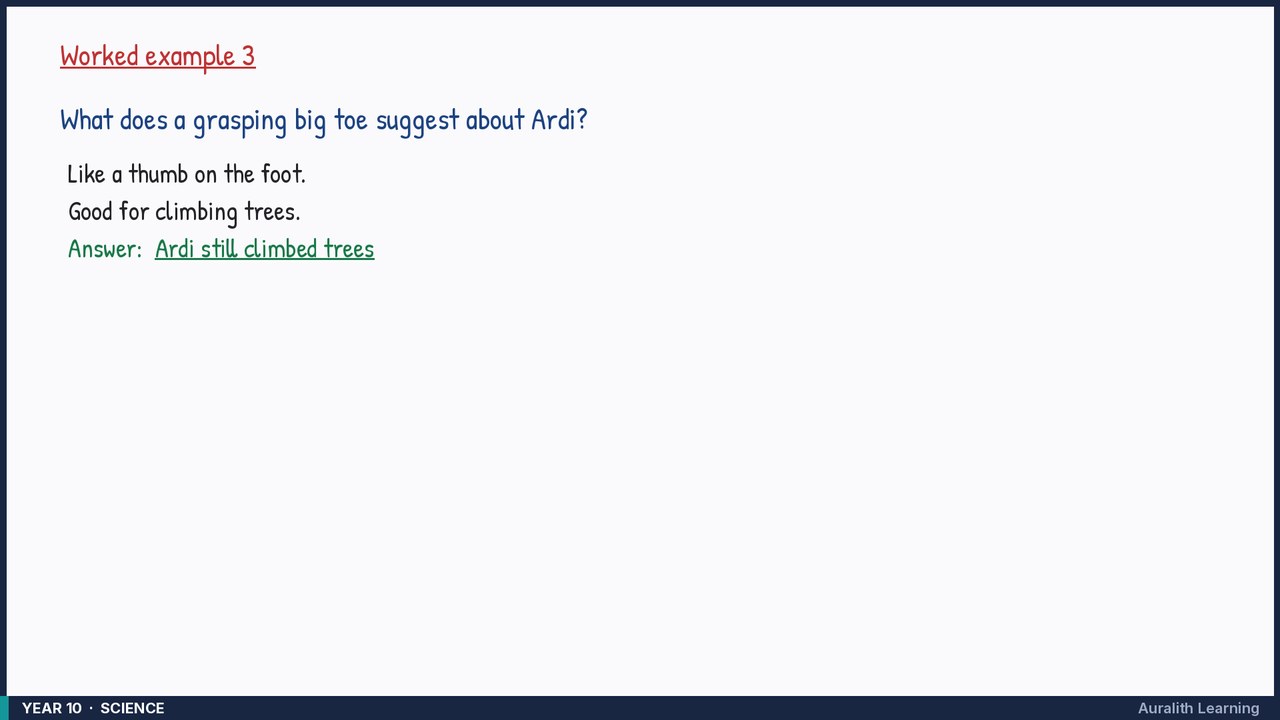
Question 3
What does a grasping big toe suggest about Ardi?
- Step 1: Like a thumb on the foot.
- Step 2: Good for climbing trees.
Answer: Ardi still climbed trees