Year 10 (ages 14–15, Grade 9 in the US) · History · Health and the people: further topics · Lesson 3
Modern surgery, the drugs industry and antibiotic resistance
How war and technology transformed surgery in the 20th century, from plastic surgery and blood transfusions to transplants and keyhole surgery; how the pharmaceutical industry developed and was regulated; and why antibiotic resistance is a growing challenge.
Exam boards: this lesson matches the AQA GCSE history courses. Check which course your school follows.
9-minute video lesson
Teaching, worked examples and 20 practice questions solved step by step.
Watch free for a monthWhat your child will learn
- Explain how the two world wars affected surgery
- Describe key advances in modern surgery
- Explain the growth and regulation of the pharmaceutical industry
- Explain why antibiotic resistance is a problem
The method
- What did war change in surgery?
- Which new technologies helped?
- What did drug companies do?
- Why was regulation needed?
- What is antibiotic resistance, and why does it matter?
Key words: plastic surgery, transfusion, transplant, keyhole surgery, antibiotic resistance.
Worked examples
Worked examples from the lesson, with every step.
Question 1
Describe two ways the First World War affected surgery. (4 marks)
- Step 1: Gillies developed techniques for facial wounds.
- Step 2: Blood storage made transfusions possible near the front.
Answer: plastic surgery developed; blood storage for transfusions
Question 2
Why does keyhole surgery help patients?
- Step 1: Tiny cuts and a camera.
- Step 2: Less pain, less risk of infection, faster recovery.
Answer: smaller cuts mean faster recovery and less risk
Question 3
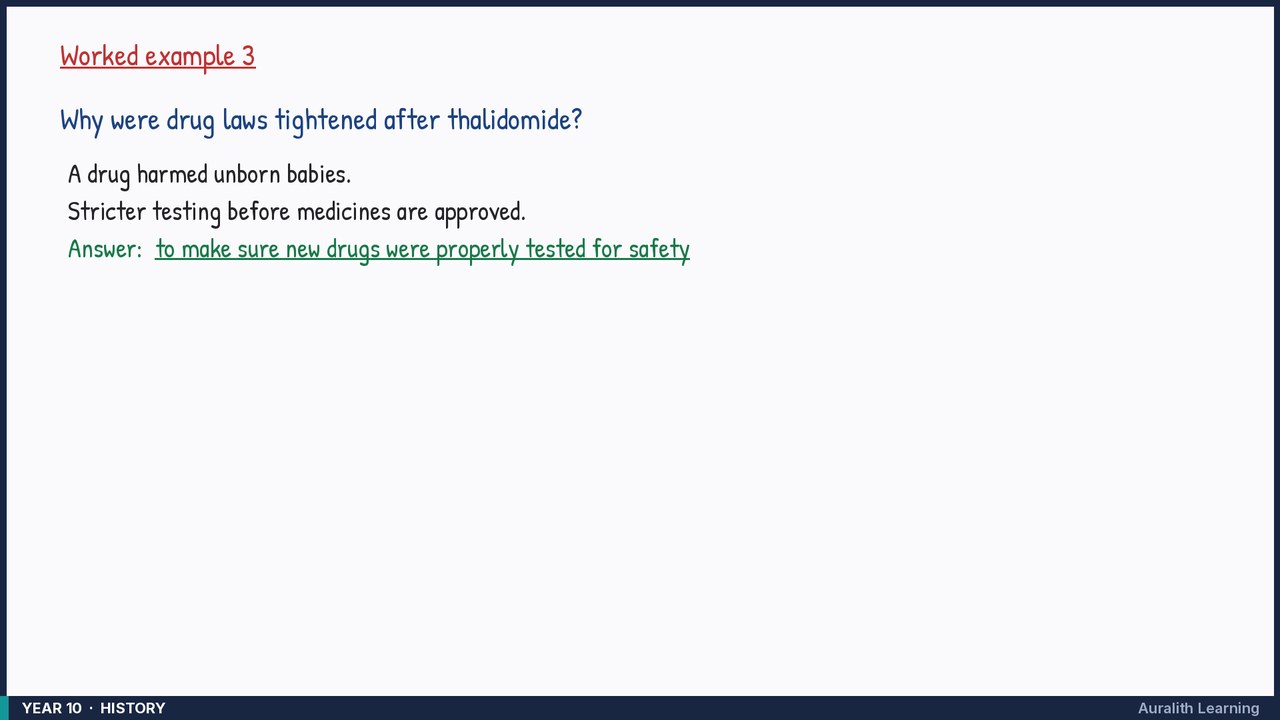
Why were drug laws tightened after thalidomide?
- Step 1: A drug harmed unborn babies.
- Step 2: Stricter testing before medicines are approved.
Answer: to make sure new drugs were properly tested for safety