Year 11 (ages 15–16, Grade 10 in the US) · Science · Biology: ecosystems · Lesson 2
Interdependence and material cycles
Food chains and webs, predator–prey cycles and competition, how materials are recycled through the carbon and water cycles, and the role of decomposers.
Exam boards: this lesson matches the AQA and Pearson Edexcel GCSE science courses. Check which course your school follows.
8-minute video lesson
Teaching, worked examples and 20 practice questions solved step by step.
Watch free for a monthWhat your child will learn
- Describe feeding relationships
- Explain predator–prey cycles
- Describe the carbon cycle
- Describe the water cycle and the role of decomposers
The method
- Food chains start with a producer (usually a plant).
- Changes in one population affect others.
- Carbon: photosynthesis removes CO₂; respiration and combustion release it.
- Decomposers break down dead matter, returning nutrients.
Key words: interdependence, producer, consumer, decomposer, carbon cycle.
Worked examples
Worked examples from the lesson, with every step.
Question 1
In grass → rabbit → fox, identify the producer and the secondary consumer.
- Step 1: Grass makes food by photosynthesis.
- Step 2: The fox eats the primary consumer.
Answer: grass; fox
Question 2
Explain why fox numbers rise after rabbit numbers rise.
- Step 1: More rabbits = more food.
- Step 2: More foxes survive and breed.
Answer: more food available
Question 3
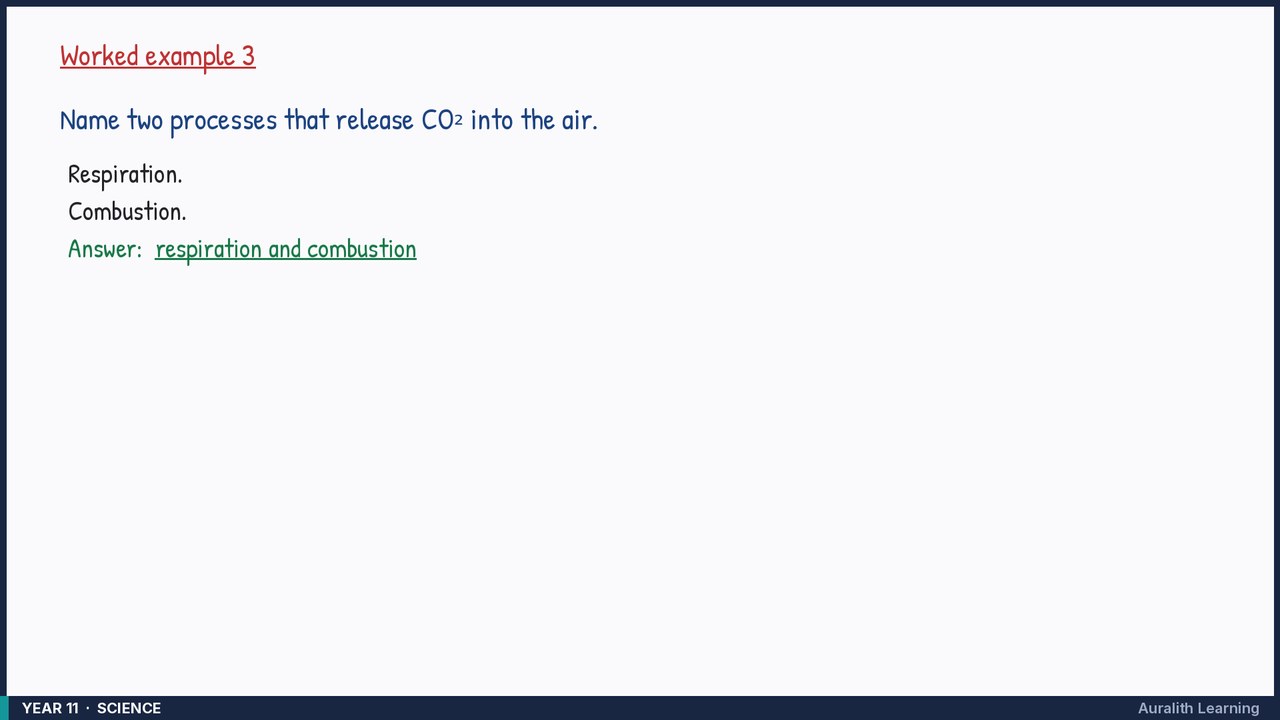
Name two processes that release CO₂ into the air.
- Step 1: Respiration.
- Step 2: Combustion.
Answer: respiration and combustion