Year 11 (ages 15–16, Grade 10 in the US) · Religious education · GCSE Religious Studies revision · Lesson 3
Revision: religious and non-religious views on ethical issues
A balanced revision overview of how Christians, Muslims and humanists approach key ethical themes — the sanctity and quality of life, crime and punishment, and peace and conflict — using sources of wisdom and showing diversity of views.
Exam boards: this lesson matches the AQA and Pearson Edexcel GCSE religious education courses. Check which course your school follows.
9-minute video lesson
Teaching, worked examples and 20 practice questions solved step by step.
Watch free for a monthWhat your child will learn
- Explain the sanctity and quality of life
- Explain views on crime and punishment
- Explain views on peace and conflict
- Show diversity of religious and non-religious views
The method
- Sanctity of life: life is sacred, given by God.
- Quality of life: the wellbeing of a person matters most (often humanist).
- Punishment aims: retribution, deterrence, reformation, protection.
- Just war theory vs pacifism.
Key words: sanctity of life, quality of life, forgiveness, just war, pacifism.
Worked examples
Worked examples from the lesson, with every step.
Question 1
Explain the sanctity of life.
- Step 1: Life is sacred and God-given.
- Step 2: Only God should decide when life ends.
Answer: life is sacred because it is given by God
Question 2
What is quality of life?
- Step 1: How good a person's life is — health, wellbeing, happiness.
Answer: the general wellbeing of a person
Question 3
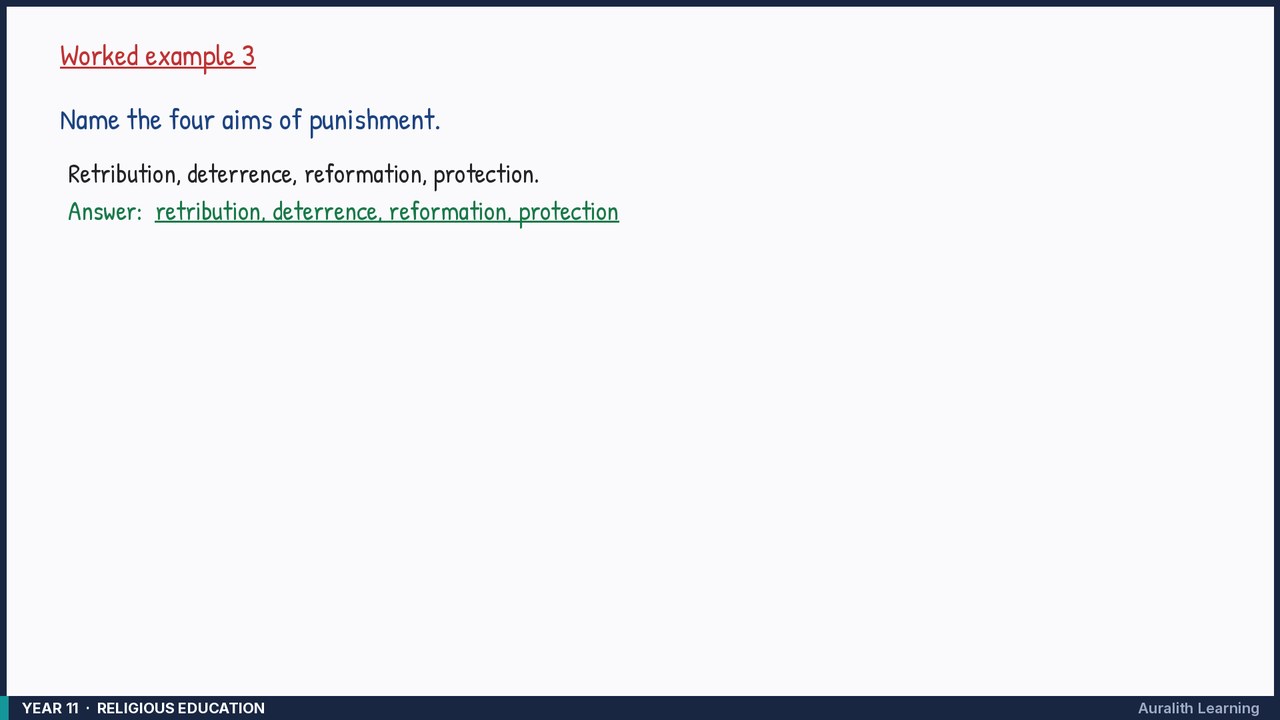
Name the four aims of punishment.
- Step 1: Retribution, deterrence, reformation, protection.
Answer: retribution, deterrence, reformation, protection