Year 11 (ages 15–16, Grade 10 in the US) · Religious education · GCSE Religious Studies revision · Lesson 2
Revision: comparing Christian and Muslim beliefs and practices
A revision lesson comparing key beliefs and practices in Christianity and Islam — the nature of God, prophets and Jesus, holy books, life after death, prayer, charity, fasting and pilgrimage — highlighting similarities and differences respectfully.
Exam boards: this lesson matches the AQA and Pearson Edexcel GCSE religious education courses. Check which course your school follows.
8-minute video lesson
Teaching, worked examples and 20 practice questions solved step by step.
Watch free for a monthWhat your child will learn
- Compare beliefs about God
- Compare beliefs about Jesus and prophets
- Compare beliefs about life after death
- Compare key practices
The method
- Both are monotheistic, but describe God differently.
- Christians: Jesus is God incarnate. Muslims: Isa is a great prophet.
- Both believe in judgement, heaven and hell.
- Compare prayer, charity, fasting and pilgrimage.
Key words: monotheism, Trinity, Tawhid, prophet, pilgrimage.
Worked examples
Worked examples from the lesson, with every step.
Question 1
Give one similarity in Christian and Muslim beliefs about God.
- Step 1: Both believe in one God.
Answer: both are monotheistic
Question 2
Explain one difference in beliefs about Jesus.
- Step 1: Son of God, divine.
- Step 2: A great prophet, not divine.
Answer: divine Son of God vs great prophet
Question 3
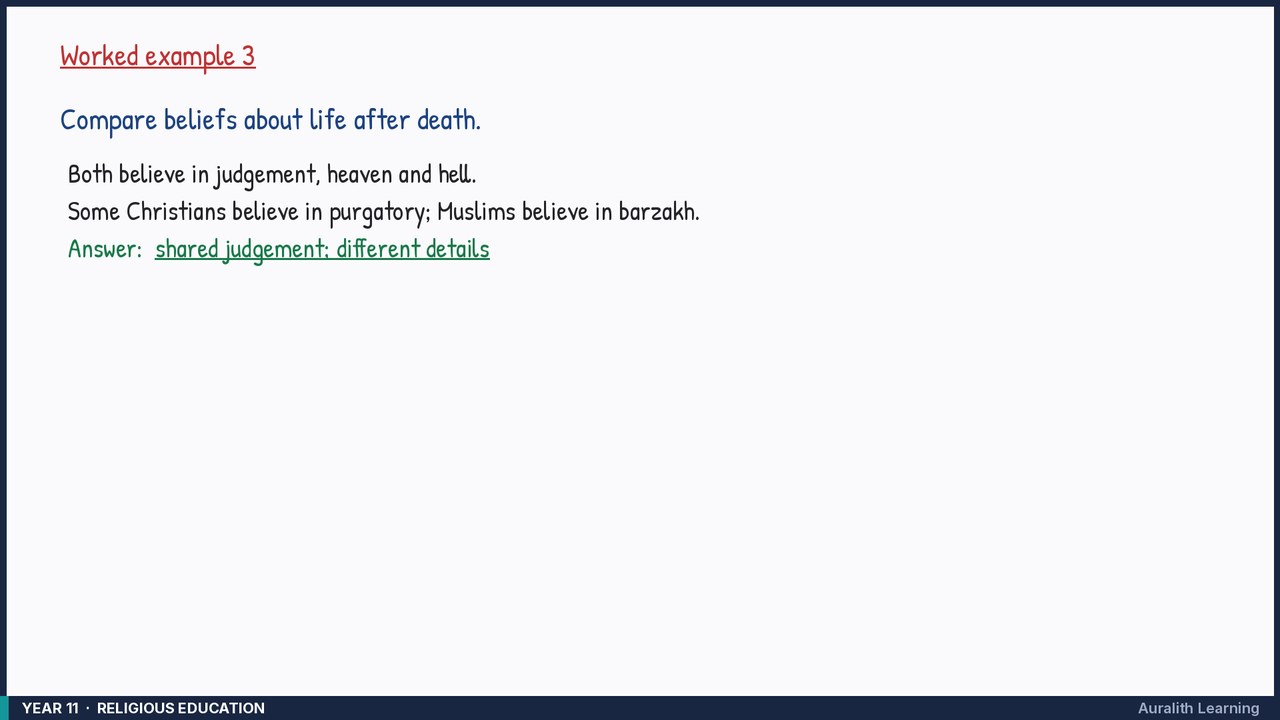
Compare beliefs about life after death.
- Step 1: Both believe in judgement, heaven and hell.
- Step 2: Some Christians believe in purgatory; Muslims believe in barzakh.
Answer: shared judgement; different details