Year 10 (ages 14–15, Grade 9 in the US) · RSHE and PSHE · Careers and money · Lesson 3
Budgeting
How to plan a budget: income and expenditure, needs and wants, fixed and variable costs, the 50/30/20 guideline, and what to do if spending is more than income.
8-minute video lesson
Teaching, worked examples and 20 practice questions solved step by step.
Watch free for a monthWhat your child will learn
- Define income and expenditure
- Sort needs and wants
- Separate fixed and variable costs
- Build and balance a simple budget
The method
- List all income.
- List all spending: fixed then variable.
- Total each and compare.
- Surplus: save it. Deficit: cut wants first.
Key words: budget, income, expenditure, surplus, deficit.
Worked examples
Worked examples from the lesson, with every step.
Question 1
Income £1800, spending £1650. Surplus or deficit, and how much?
- Step 1: £1800 − £1650 = £150
- Step 2: Income is bigger: surplus.
Answer: £150 surplus
Question 2
Need or want: a monthly film streaming subscription?
- Step 1: Essential to live or work?
- Step 2: No — a want.
Answer: want
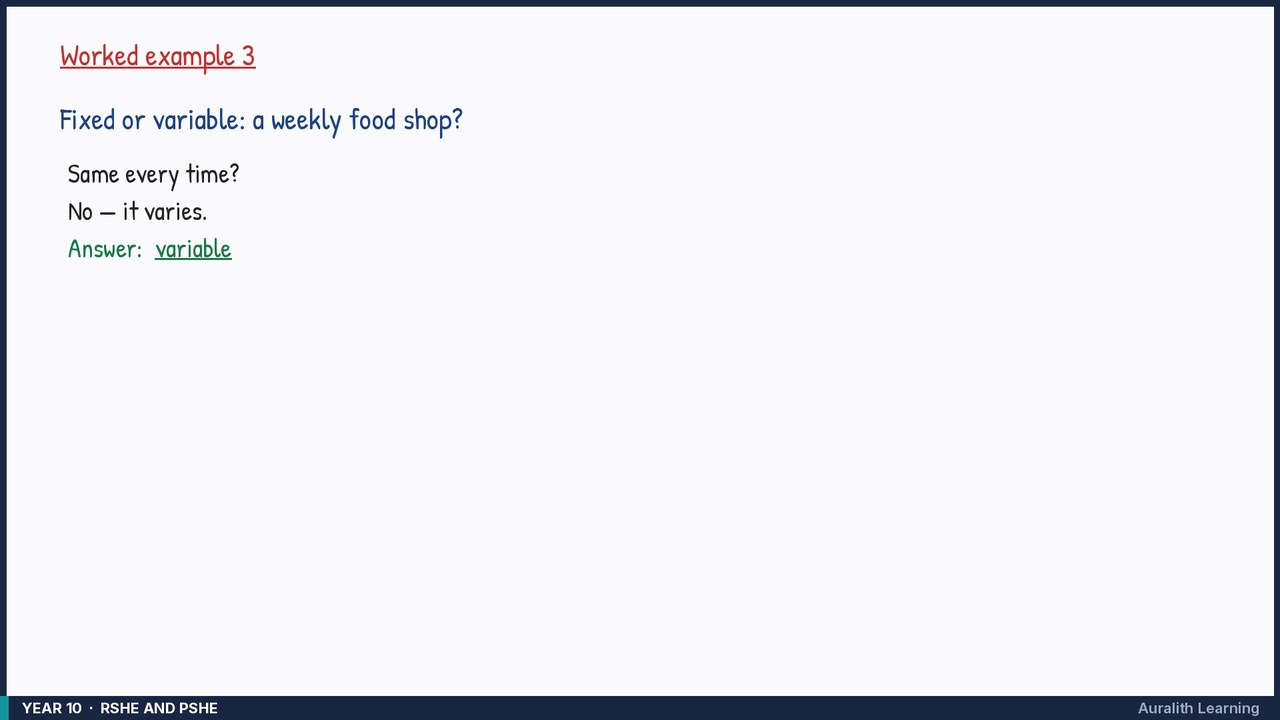
Question 3
Fixed or variable: a weekly food shop?
- Step 1: Same every time?
- Step 2: No — it varies.
Answer: variable