Year 10 (ages 14–15, Grade 9 in the US) · English · Digital and multimodal texts · Lesson 3
Analysing social media posts
How short social media posts communicate and persuade: informal register, emojis, hashtags, images and calls to action, plus spotting bias and misinformation, using invented posts.
8-minute video lesson
Teaching, worked examples and 20 practice questions solved step by step.
Watch free for a monthWhat your child will learn
- Analyse register and tone in posts
- Explain hashtags, emojis and images
- Spot persuasion and bias
- Check claims before sharing
The method
- Who posted it, for whom, and why?
- Analyse register: informal or formal, and why.
- Analyse visual and digital features: image, emoji, hashtag.
- Check: is the claim supported? Who benefits?
Key words: register, hashtag, engagement, bias, misinformation.
Worked examples
Worked examples from the lesson, with every step.
Question 1
What is the register of the youth club post?
- Step 1: ‘Big news!!’, exclamation marks, ‘you'd’.
- Step 2: Informal and excited.
Answer: informal and enthusiastic
Question 2
Why does the club choose an informal register?
- Step 1: Teenagers.
- Step 2: Feels friendly and fun, not like school.
Answer: to appeal to teenagers and seem friendly
Question 3
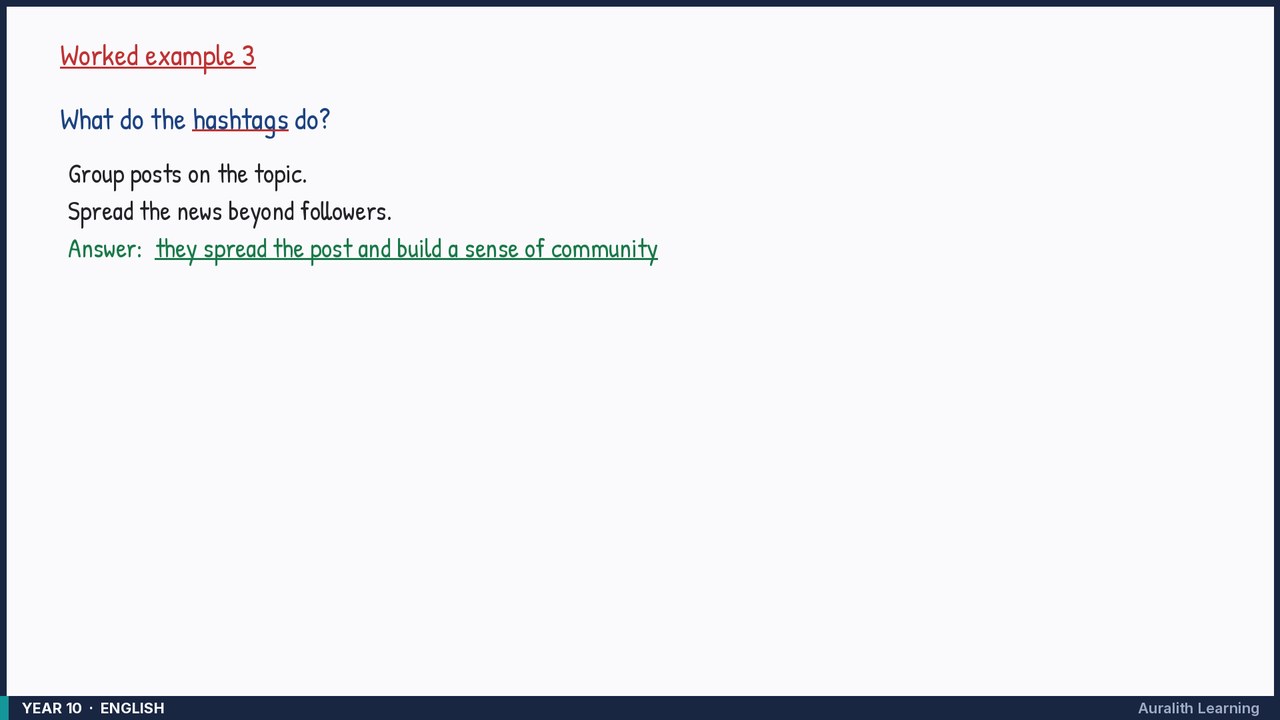
What do the hashtags do?
- Step 1: Group posts on the topic.
- Step 2: Spread the news beyond followers.
Answer: they spread the post and build a sense of community