Year 11 (ages 15–16, Grade 10 in the US) · Science · Biology: coordination and control · Lesson 2
Hormones and blood glucose control
The endocrine system and key hormones, how insulin and glucagon control blood glucose, the differences between type 1 and type 2 diabetes, and how hormonal and nervous control compare.
Exam boards: this lesson matches the AQA and Pearson Edexcel GCSE science courses. Check which course your school follows.
8-minute video lesson
Teaching, worked examples and 20 practice questions solved step by step.
Watch free for a monthWhat your child will learn
- Name endocrine glands and their hormones
- Explain how blood glucose is controlled
- Compare type 1 and type 2 diabetes
- Compare nervous and hormonal control
The method
- Hormones are chemicals carried in the blood to target organs.
- High glucose → insulin → glucose into cells; liver stores glycogen.
- Low glucose → glucagon → glycogen back to glucose.
- Hormones act more slowly but for longer than nerves.
Key words: hormone, endocrine gland, insulin, glucagon, diabetes.
Worked examples
Worked examples from the lesson, with every step.
Question 1
Explain what happens when blood glucose rises after a meal.
- Step 1: The pancreas detects high glucose.
- Step 2: It releases insulin.
- Step 3: Cells take in glucose; the liver stores it as glycogen.
Answer: insulin lowers blood glucose
Question 2
Explain what happens when blood glucose falls.
- Step 1: The pancreas releases glucagon.
- Step 2: The liver converts glycogen into glucose, released into the blood.
Answer: glucagon raises blood glucose
Question 3
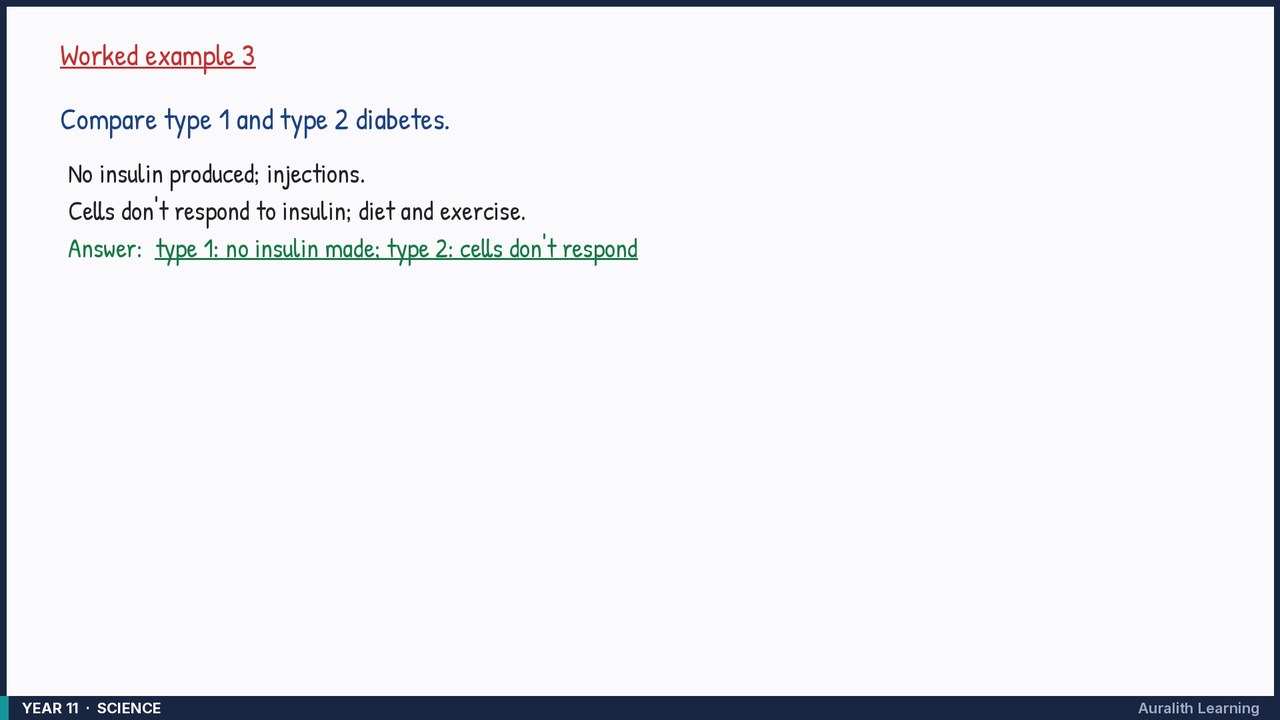
Compare type 1 and type 2 diabetes.
- Step 1: No insulin produced; injections.
- Step 2: Cells don't respond to insulin; diet and exercise.
Answer: type 1: no insulin made; type 2: cells don't respond