Year 10 (ages 14–15, Grade 9 in the US) · Physical education · Healthy, active lifestyles · Lesson 1
The benefits of an active lifestyle
The physical, mental and social benefits of regular physical activity, the consequences of a sedentary lifestyle, and the UK guidance on how active young people should be.
Exam boards: this lesson matches the AQA and Pearson Edexcel GCSE physical education courses. Check which course your school follows.
8-minute video lesson
Teaching, worked examples and 20 practice questions solved step by step.
Watch free for a monthWhat your child will learn
- Define health and fitness
- Explain physical, mental and social benefits of exercise
- Describe the risks of a sedentary lifestyle
- Recall UK activity guidance for young people
The method
- Health: physical, mental and social well-being.
- Fitness: meeting the demands of your environment.
- Group benefits: physical, mental, social.
- Explain: activity → change in the body or mind → benefit.
Key words: health, fitness, sedentary, well-being, serotonin.
Worked examples
Worked examples from the lesson, with every step.
Question 1
Explain one physical benefit of regular exercise.
- Step 1: The heart gets stronger.
- Step 2: Lower resting heart rate; less risk of heart disease.
Answer: stronger heart → lower risk of heart disease
Question 2
Explain one mental benefit of exercise.
- Step 1: Serotonin is released.
- Step 2: Improves mood; reduces stress.
Answer: serotonin release improves mood
Question 3
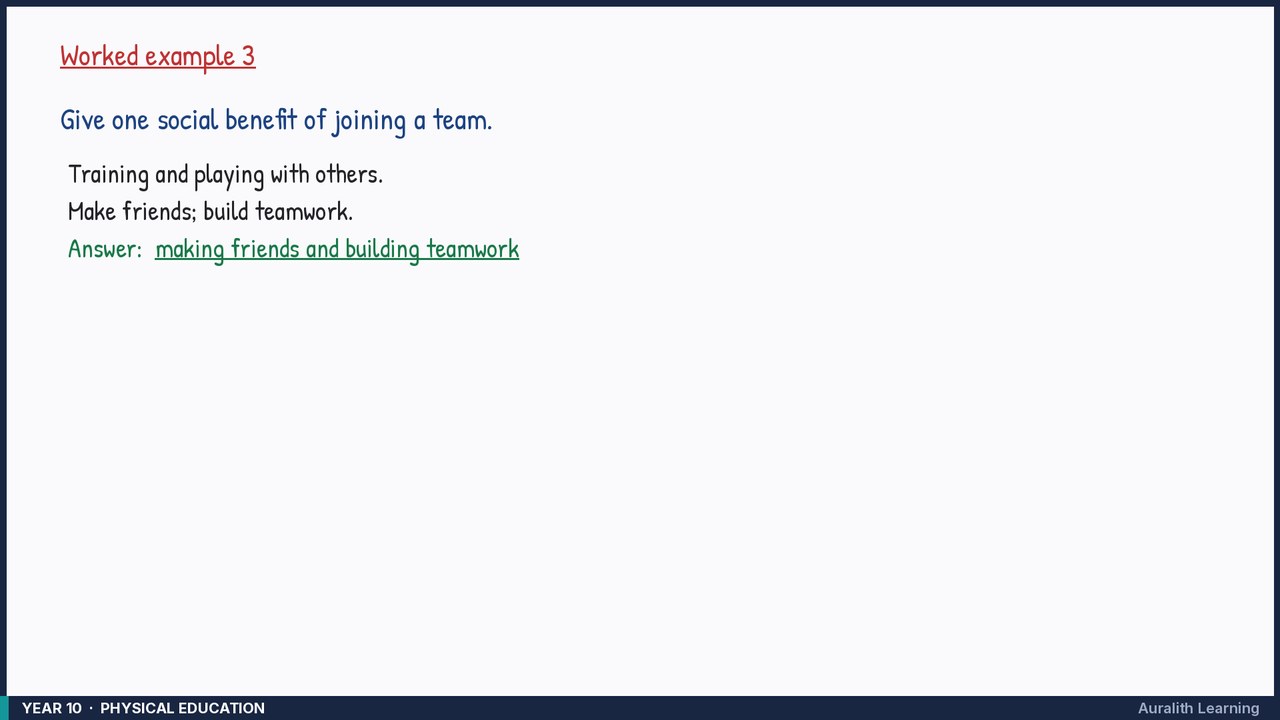
Give one social benefit of joining a team.
- Step 1: Training and playing with others.
- Step 2: Make friends; build teamwork.
Answer: making friends and building teamwork